B2B Procurement Guide
Rooftop Tent Container Loading Plan for Importers
A rooftop tent container-loading workflow covering SKU normalization, row sequence, orientation, restraints, moisture, evidence and destination unloading.
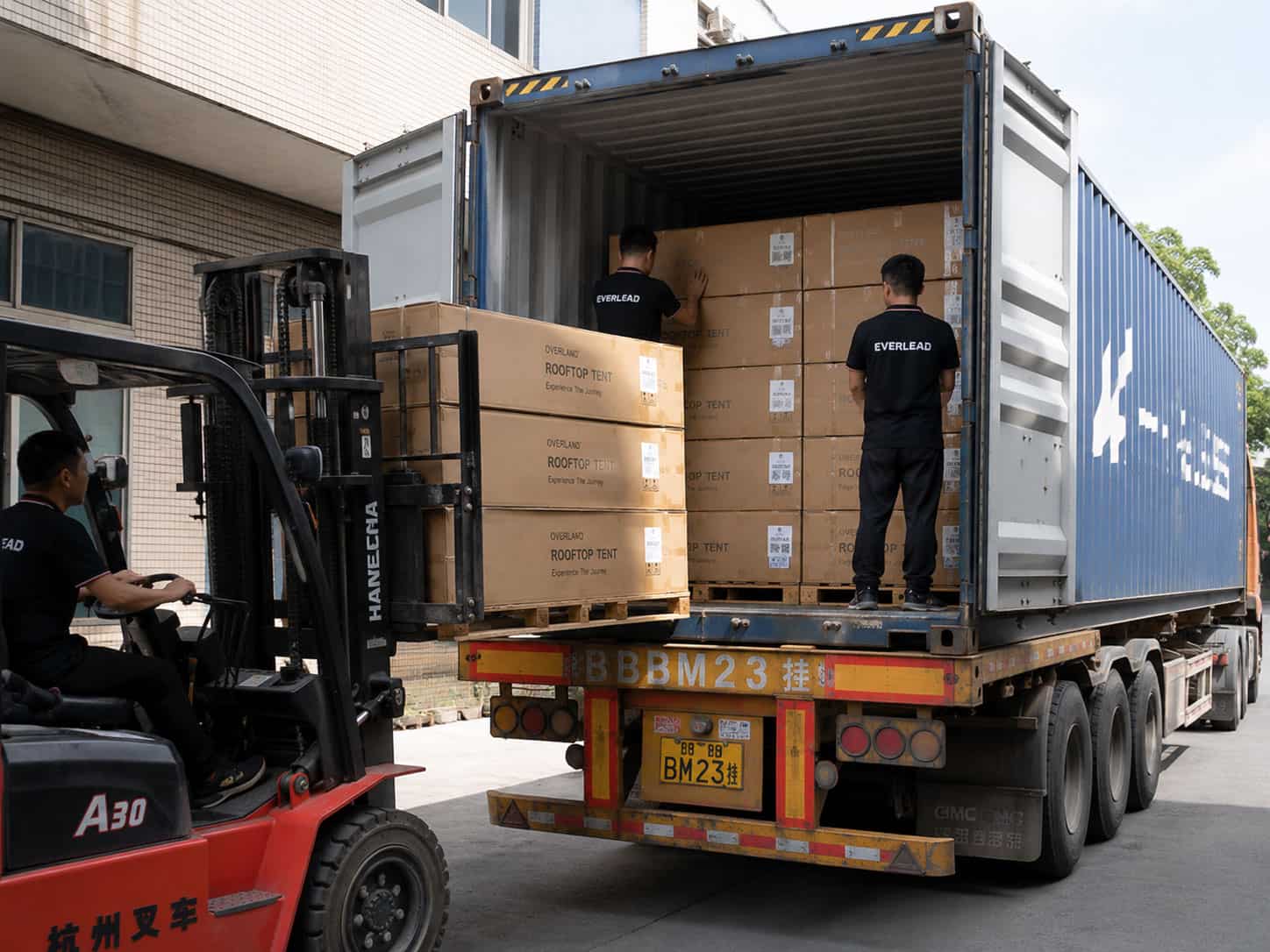
Direct answer: A rooftop tent container loading plan should reconcile the purchase order with one controlled SKU and carton list, assign demand priorities, group compatible footprints, define safe orientation and stacking, and map the front, center and door zones in the sequence they will be loaded and unloaded. The plan must include accessory cartons, void restraint, moisture control, carton counting, label checks, damaged-carton rejection, photographs and packing-list reconciliation. Before closing the doors, the supervisor should verify loaded quantity, row map, restraints, container and seal numbers and final condition. The destination warehouse should receive the unloading order and discrepancy-evidence rules before arrival. The objective is not maximum cube alone; it is a load that arrives countable, identifiable, stable and practical to unload.
Search intent: Turn an approved purchase order into an executable, auditable container stuffing and unloading plan.
Who this is for: Importers, shipping managers, suppliers, warehouse teams, quality inspectors and freight forwarders.
Collect the Input Files Before Drawing Rows
Convert the purchase order into a loadable container map that coordinates SKU priorities, carton orientation, protection, sequence, evidence and destination receiving requirements. Use the table as a working record: mark each answer as assumption, verified or approved; name the source file; and stop a decision when its evidence does not match the exact configuration under review.
| Decision area | What must be defined | Evidence and red-flag test |
|---|---|---|
| Order normalization | reconcile purchase order lines, model codes, colors, carton quantities, accessory cartons and packaging revisions before mapping space. | Request dry-container and moisture-control record. Red flag: accessory cartons missing from the space model. |
| Priority allocation | protect committed dealer demand, launch inventory and critical replacement parts before using remaining cube for optional variants. | Request carton count, label scan and supervisor checks. Red flag: model codes inconsistent with physical labels. |
| Footprint grouping | cluster cartons with compatible dimensions and safe orientations to reduce unstable gaps, unsupported edges and confusing row transitions. | Request empty-box, row-progress and final-door photographs. Red flag: door-zone cartons needed last at destination. |
| Layer rules | define which cartons may carry load, maximum stacking guidance, interlayer protection and exceptions for fragile shells or protruding hardware. | Request packing-list, invoice, container and seal reconciliation. Red flag: void restraints press against shell surfaces. |
| Sequence map | plan front, center and door zones around destination unloading order, warehouse access and the cartons needed first after arrival. | Request destination unloading and discrepancy instructions. Red flag: wet container accepted without record. |
| Void management | specify airbags, boards, blocks, straps or other approved restraints without pressing vulnerable shell panels or fabric zones. | Request planned-versus-actual post-shipment review. Red flag: loaded quantity differs from packing list. |
| Moisture plan | choose dry-container inspection, desiccant placement, moisture barriers and ventilation approach appropriate to route and packing materials. | Request dry-container and moisture-control record. Red flag: seal evidence absent. |
| Loading controls | assign carton counting, label scanning, orientation inspection, damage rejection and supervisor sign-off during stuffing. | Request carton count, label scan and supervisor checks. Red flag: destination team receives no unloading map. |
| Evidence pack | capture empty container condition, row progression, restraint placement, door-zone completion, seal number and final exterior condition. | Request empty-box, row-progress and final-door photographs. Red flag: accessory cartons missing from the space model. |
| Document match | reconcile loaded counts with packing list, commercial invoice, booking, container number, seal record and destination warehouse notice. | Request packing-list, invoice, container and seal reconciliation. Red flag: model codes inconsistent with physical labels. |
| Receiving handoff | share unloading sequence, heavy-carton warnings, inspection locations, discrepancy process and evidence requirements before vessel arrival. | Request destination unloading and discrepancy instructions. Red flag: door-zone cartons needed last at destination. |
| Post-load review | compare planned versus actual cube, substitutions, unused spaces, damage outcomes and unloading feedback to improve the next map. | Request planned-versus-actual post-shipment review. Red flag: void restraints press against shell surfaces. |
Build the Loading Map From Front Wall to Doors
Step 1: Order normalization
reconcile purchase order lines, model codes, colors, carton quantities, accessory cartons and packaging revisions before mapping space. Record the current assumption, responsible owner and the event that turns it into an approved decision.
Decision output: A normalized PO, SKU, color, carton and packaging-revision file.
Step 2: Priority allocation
protect committed dealer demand, launch inventory and critical replacement parts before using remaining cube for optional variants. Make the result usable by the next team instead of leaving it in a sales conversation.
Decision output: A demand-priority list that protects committed and critical stock.
Step 3: Footprint grouping
cluster cartons with compatible dimensions and safe orientations to reduce unstable gaps, unsupported edges and confusing row transitions. If the answer changes stock, safety, cost or customer communication, require written approval.
Decision output: Footprint groups with permitted orientations.
Step 4: Layer rules
define which cartons may carry load, maximum stacking guidance, interlayer protection and exceptions for fragile shells or protruding hardware. Link the decision to the exact model, sample or file revision so a later team can reproduce it.
Decision output: Layer and stacking rules tied to packaging approval.
Step 5: Sequence map
plan front, center and door zones around destination unloading order, warehouse access and the cartons needed first after arrival. Define what evidence closes the item and when it must be reviewed again.
Decision output: A row sequence aligned with destination unloading needs.
Step 6: Void management
specify airbags, boards, blocks, straps or other approved restraints without pressing vulnerable shell panels or fabric zones. Test the process with real staff before it becomes a public or contractual promise.
Decision output: A void and restraint plan that avoids vulnerable surfaces.
Control Stuffing Evidence and Document Reconciliation
For importers, shipping managers, suppliers, warehouse teams, quality inspectors and freight forwarders., evidence should survive staff changes, shipment arrival and customer claims. Store it by model and revision, not only by supplier name. Commercial estimates remain conditional until the approved quotation, sample and final packing records agree.
Moisture plan
choose dry-container inspection, desiccant placement, moisture barriers and ventilation approach appropriate to route and packing materials.
Evidence to request: dry-container and moisture-control record. If the file, sample, photograph or responsible owner cannot be named, keep the point marked as an assumption.
Loading controls
assign carton counting, label scanning, orientation inspection, damage rejection and supervisor sign-off during stuffing.
Evidence to request: carton count, label scan and supervisor checks. If the file, sample, photograph or responsible owner cannot be named, keep the point marked as an assumption.
Evidence pack
capture empty container condition, row progression, restraint placement, door-zone completion, seal number and final exterior condition.
Evidence to request: empty-box, row-progress and final-door photographs. If the file, sample, photograph or responsible owner cannot be named, keep the point marked as an assumption.
Document match
reconcile loaded counts with packing list, commercial invoice, booking, container number, seal record and destination warehouse notice.
Evidence to request: packing-list, invoice, container and seal reconciliation. If the file, sample, photograph or responsible owner cannot be named, keep the point marked as an assumption.
Receiving handoff
share unloading sequence, heavy-carton warnings, inspection locations, discrepancy process and evidence requirements before vessel arrival.
Evidence to request: destination unloading and discrepancy instructions. If the file, sample, photograph or responsible owner cannot be named, keep the point marked as an assumption.
Post-load review
compare planned versus actual cube, substitutions, unused spaces, damage outcomes and unloading feedback to improve the next map.
Evidence to request: planned-versus-actual post-shipment review. If the file, sample, photograph or responsible owner cannot be named, keep the point marked as an assumption.
Illustrative Mixed-SKU Loading Workflow
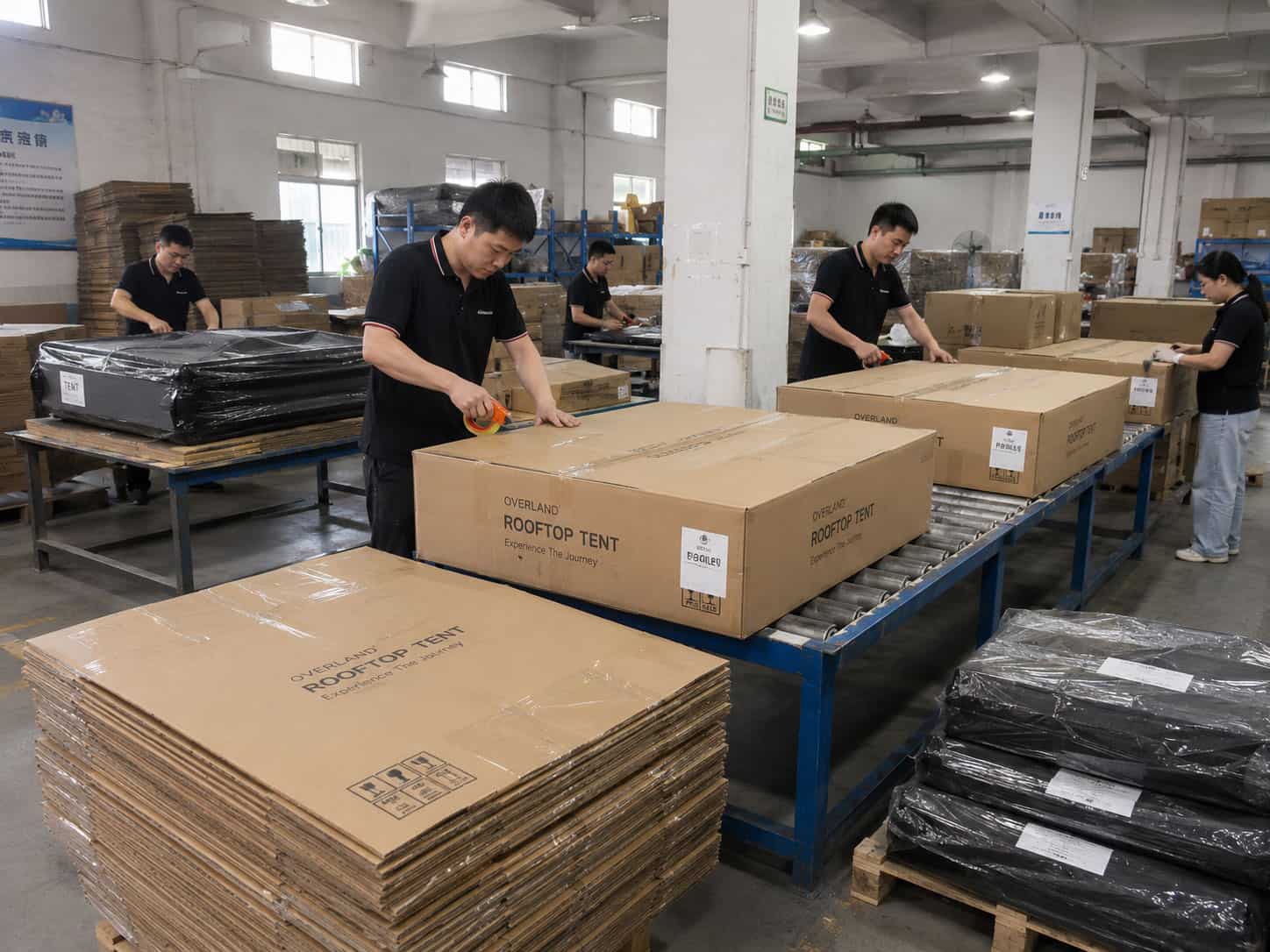
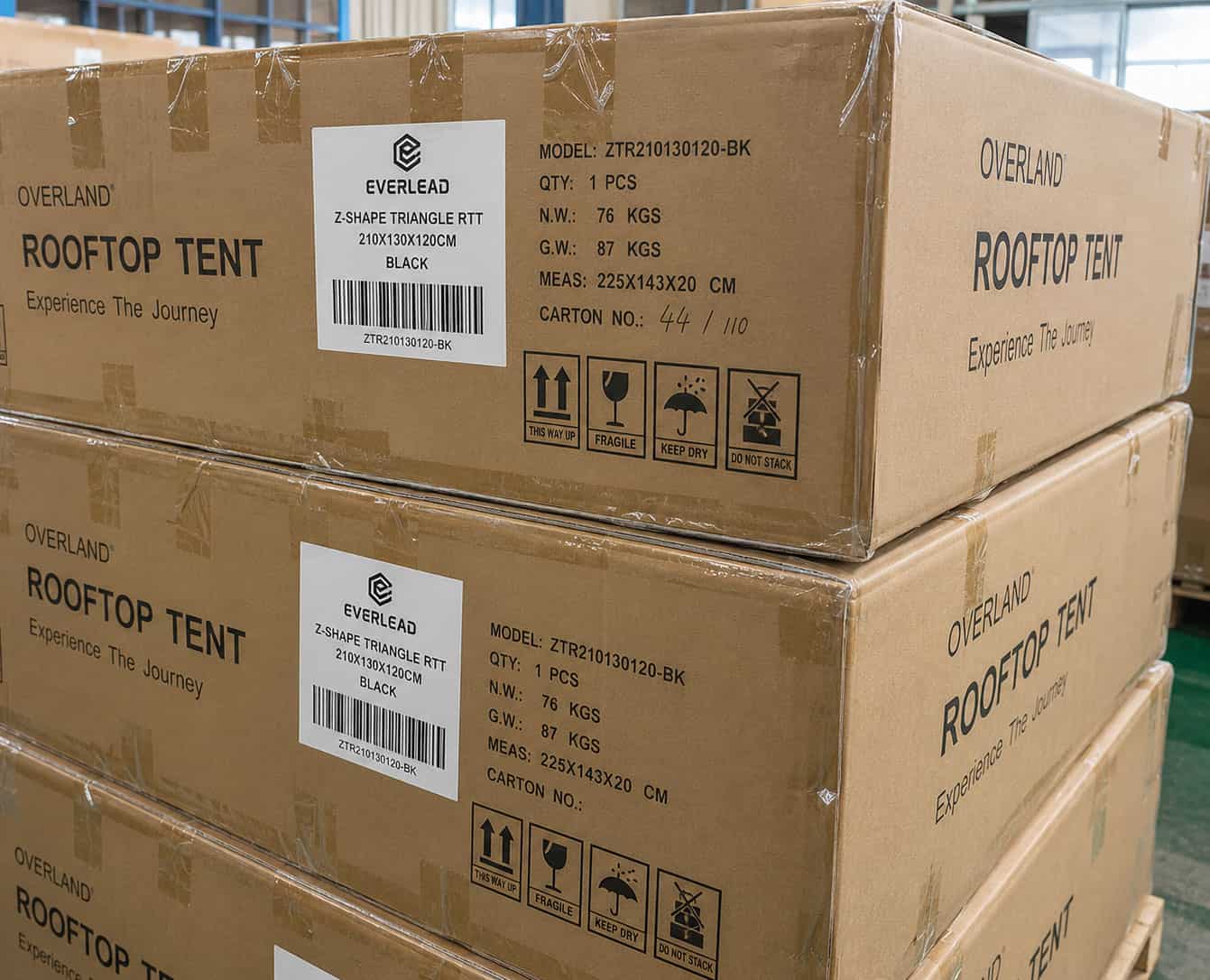
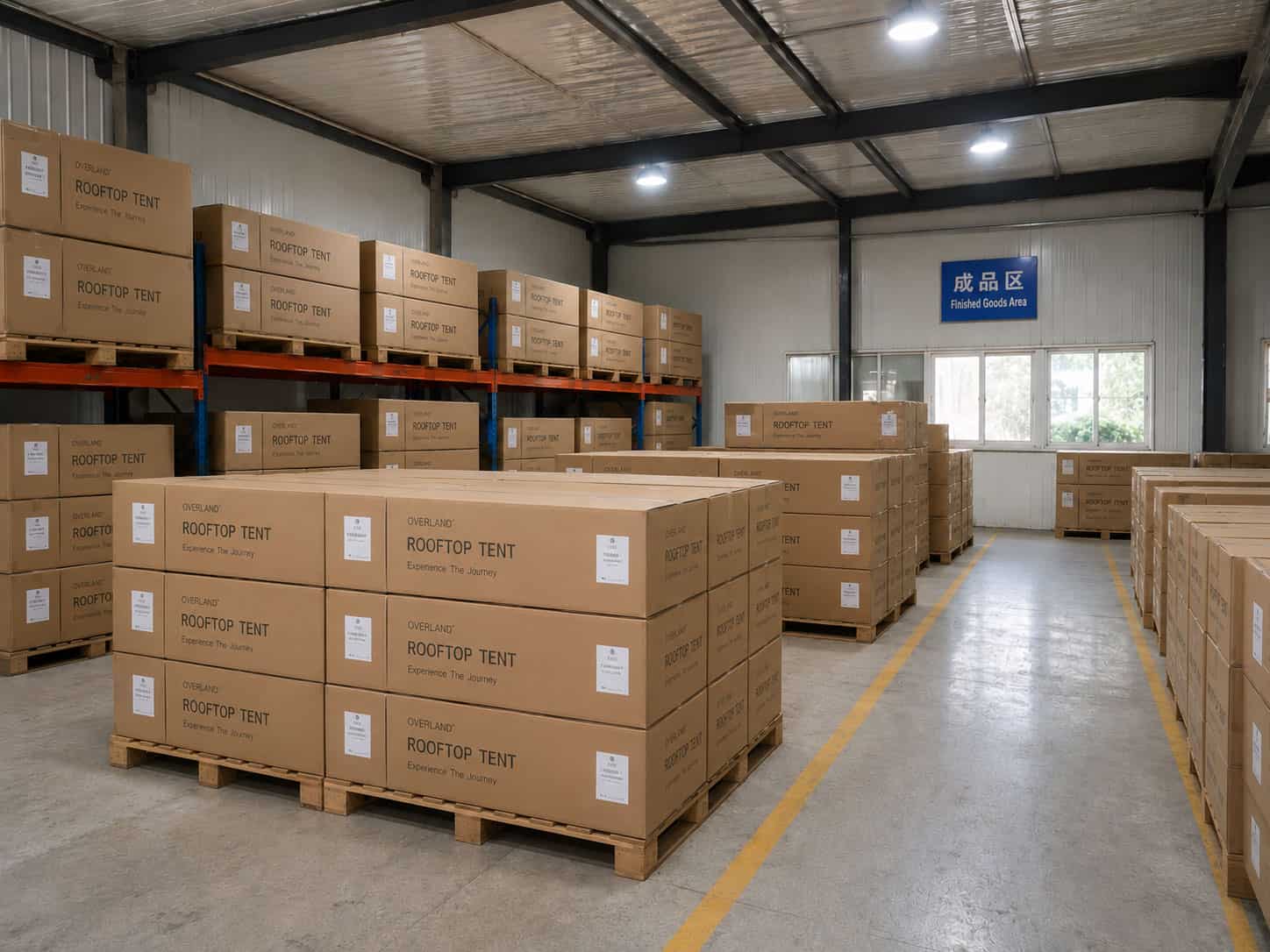
Illustrative example: an order includes hard-shell cartons, inflatable-tent cartons, accessory cartons and a spare-parts box. The planner first locks model codes, quantities, final pack revisions and gross weights. High-priority dealer orders are allocated before optional color variants. Large compatible hard-shell footprints establish stable rows; smaller cartons fill only spaces where stacking and pressure are approved. Accessories and the parts box receive named positions rather than being added after the map is complete.
| Loading phase | Control action | Required evidence |
|---|---|---|
| Before stuffing | Inspect container condition; reconcile cartons, labels and revisions. | Empty-container photos, container number and accepted-condition record. |
| During rows | Check orientation, count, unsupported edges, gaps and restraint placement. | Progress photos with row or zone references. |
| Door zone | Place destination-priority cartons according to unloading plan and protect doors. | Final row, restraint and door-clearance photos. |
| Release | Match counts and documents; record seal and exceptions. | Signed tally, final packing list, container and seal record. |
Destination handoff
The importer sends the row map, heavy-carton warnings, first-needed SKUs, inspection points and discrepancy process before vessel arrival. At receiving, the team records shifted rows, crushed corners, moisture, missing labels, count differences and restraint marks before moving cartons. Feedback is added to the next loading revision.
Name every bay, layer and exception
Number positions from the front wall toward the doors and divide the width into left, center and right lanes. A location such as F03-L2-R identifies the third row, second layer and right lane without relying on a photograph alone. Put this code beside the SKU, carton count, orientation, gross mass and restraint note in the loading map. When workers substitute a carton, they record the old and new position instead of redrawing the entire plan from memory.
Assign separate site roles: one person verifies labels and counts, one directs orientation and row placement, one inspects cartons and restraints, and one records photographs and exceptions. The supervisor decides whether a damaged, wet, incorrectly labelled or out-of-revision carton may enter the container. A rejected carton goes to a quarantine location and cannot quietly reappear in a later row. This separation improves tally accuracy during a fast stuffing operation.
The final release pack should include the planned map, as-loaded map, exception register, signed tally, container-condition record, desiccant or moisture-control placement where used, restraint photos, door-clearance photo, container number and seal. The importer forwards the as-loaded version—not the original plan—to the destination warehouse. After unloading, position-coded damage and discrepancy notes are compared with the stuffing record so the next plan reflects actual outcomes.
Operational Loading Red Flags
Red flags are useful only when they trigger action. Assign every risk to a buyer or supplier owner, define the evidence required to close it and review unresolved items before sample approval, deposit, production release and shipment.
- To prevent accessory cartons missing from the space model, define a responsible owner, the control action and the closure record required before approval.
- To prevent model codes inconsistent with physical labels, define a responsible owner, the control action and the closure record required before approval.
- To prevent door-zone cartons needed last at destination, define a responsible owner, the control action and the closure record required before approval.
- To prevent void restraints press against shell surfaces, define a responsible owner, the control action and the closure record required before approval.
- To prevent wet container accepted without record, define a responsible owner, the control action and the closure record required before approval.
- To prevent loaded quantity differs from packing list, define a responsible owner, the control action and the closure record required before approval.
- To prevent seal evidence absent, define a responsible owner, the control action and the closure record required before approval.
- To prevent destination team receives no unloading map, define a responsible owner, the control action and the closure record required before approval.
Final Container Release Checklist
Use this final list as an approval record. A checked item means the exact model, unit, condition, source and revision are documented—not merely discussed.
- Order normalization: reconcile purchase order lines, model codes, colors, carton quantities, accessory cartons and packaging revisions before mapping space.
- Priority allocation: protect committed dealer demand, launch inventory and critical replacement parts before using remaining cube for optional variants.
- Footprint grouping: cluster cartons with compatible dimensions and safe orientations to reduce unstable gaps, unsupported edges and confusing row transitions.
- Layer rules: define which cartons may carry load, maximum stacking guidance, interlayer protection and exceptions for fragile shells or protruding hardware.
- Sequence map: plan front, center and door zones around destination unloading order, warehouse access and the cartons needed first after arrival.
- Void management: specify airbags, boards, blocks, straps or other approved restraints without pressing vulnerable shell panels or fabric zones.
- Moisture plan: choose dry-container inspection, desiccant placement, moisture barriers and ventilation approach appropriate to route and packing materials.
- Loading controls: assign carton counting, label scanning, orientation inspection, damage rejection and supervisor sign-off during stuffing.
- Evidence pack: capture empty container condition, row progression, restraint placement, door-zone completion, seal number and final exterior condition.
- Document match: reconcile loaded counts with packing list, commercial invoice, booking, container number, seal record and destination warehouse notice.
- Receiving handoff: share unloading sequence, heavy-carton warnings, inspection locations, discrepancy process and evidence requirements before vessel arrival.
- Post-load review: compare planned versus actual cube, substitutions, unused spaces, damage outcomes and unloading feedback to improve the next map.
Sources and Methodology
For the intent “Turn an approved purchase order into an executable, auditable container stuffing and unloading plan.”, this guide combines the SUVTent rooftop tent project knowledge base, current internal product briefs and the sources below. Advice is identified as a decision method; numerical examples are labelled illustrative or tied to the stated specification brief. Certifications, MOQ, lead time, warranty, loading quantity and commercial terms are not treated as confirmed unless the selected model and approved project documents support them.
- IMO/ILO/UNECE CTU Code: https://unece.org/transport/intermodal-transport/imoilounece-code-practice-packing-cargo-transport-units-ctu-code
- Hapag-Lloyd container specifications: https://www.hapag-lloyd.com/en/services-information/cargo-fleet/container/40-standard-high-cube.html
About the supplier: EVERLEAD is the product brand used by Guangdong Jituo Outdoor Products Co., Ltd. For importers, shipping managers, suppliers, warehouse teams, quality inspectors and freight forwarders., the relevant B2B discussions may involve rooftop tents, camping shelters and related outdoor products. Wholesale, private-label, OEM and ODM scope is confirmed by selected model and approved project requirements.
Buyer FAQ
What files are needed for a container loading plan?
Use the approved PO, SKU master, final carton dimensions and gross weights, packing revisions, accessory list, container data and destination unloading priorities.
Why should the door zone be planned separately?
It affects door closure, restraint, unloading access and which cartons the destination warehouse reaches first.
What loading photos should be taken?
Capture empty-container condition, row progression, restraint placement, door-zone completion, container number, seal and final exterior condition.
How are mixed SKUs prioritized?
Protect committed demand and critical parts first, then optimize compatible footprints without distorting the commercial assortment.
Who approves the final load?
The project should name the loading supervisor and document owners; the forwarder and relevant parties must confirm equipment and transport requirements.