Quick answer: Rooftop tent compatibility is a fitment and risk-control topic. Buyers should check dynamic roof load, static capacity, rack type, crossbar spacing, tent weight, installation height, ladder angle, and customer vehicle mix before recommending a model.
Rooftop Tent Compatibility Checks Before Product Selection
Compatibility pages are especially important for dealers because one wrong recommendation can create returns, installation problems, and unhappy end users. A good page should teach buyers what information to collect before asking for a tent recommendation.
SUVTent's compatibility conversation is built around vehicle segment, roof system, product weight, and use case. The goal is not to promise universal fitment; it is to screen likely matches and identify questions that must be verified before installation.
Vehicle data first
Collect vehicle model, roof type, rack brand or platform, dynamic roof load, and installation height before comparing tent styles.
Dealer protection
Compatibility notes help dealers avoid overselling one model to every vehicle and make their own customer support easier.
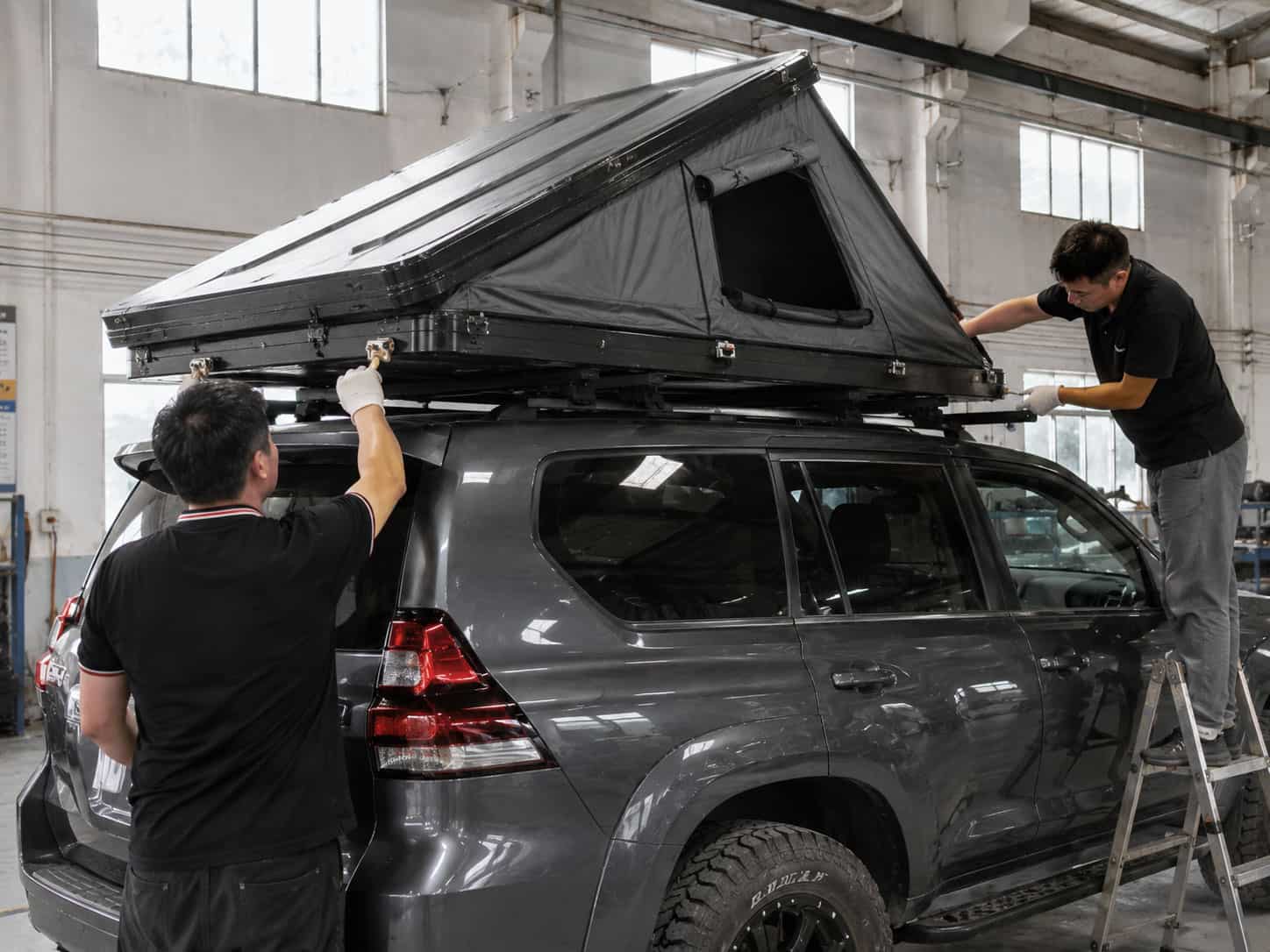
Compatibility Data Buyers Should Collect
| Evaluation area | What to check | Why it matters |
|---|---|---|
| Vehicle roof | Factory rails, gutters, bare roof, truck bed rack, platform rack, or crossbars. | The mounting system limits what tent weight and footprint make sense. |
| Load guidance | Dynamic roof load, static support discussion, rack rating, and road-use assumptions. | Buyers must separate driving load from parked camping load. |
| Tent dimensions | Closed footprint, packed weight, ladder direction, and overhang. | Fitment can fail even when weight looks acceptable. |
| User scenario | Solo trips, family camping, rental fleet, extreme overlanding, or showroom demo. | The best compatible model changes with real use case. |
Rooftop Tent Compatibility Inquiry Checklist
- Send vehicle year, make, model, roof type, and rack details.
- Confirm the rack manufacturer's dynamic load guidance and mounting points.
- Compare tent closed size with crossbar spacing and vehicle roof length.
- Check ladder angle, vehicle height, side opening, rear hatch clearance, and parking environment.
- Ask whether a lighter tent, lower closed height, or truck bed rack solution would reduce risk.
Compatibility Screening Flow
- Identify the most common vehicles in the buyer's customer base.
- Group them by rack type and realistic roof load range.
- Match product families to those groups instead of recommending one model for all cars.
- Create dealer notes for vehicles that need extra verification.
- Use customer feedback to refine the compatibility list over time.
Detailed Sourcing Notes for rooftop tent compatibility
Rooftop Tent Compatibility Checks Before Product Selection should be reviewed as a complete sourcing path. Buyers should connect the page topic with channel role, vehicle segment, model positioning, packaging pressure, sample expectations, and what their own sales team needs to explain after launch. This keeps the discussion grounded in commercial use instead of turning the page into a keyword-only article.
The first evaluation area is vehicle roof: Factory rails, gutters, bare roof, truck bed rack, platform rack, or crossbars.. This matters because the mounting system limits what tent weight and footprint make sense. The second area is load guidance: Dynamic roof load, static support discussion, rack rating, and road-use assumptions.. For a buyer comparing suppliers, these two points create a more useful conversation than asking for a general catalog or a single lowest price.
Before sample or bulk discussion, the buyer should start with practical preparation: Send vehicle year, make, model, roof type, and rack details. The next step is to confirm the rack manufacturer's dynamic load guidance and mounting points. Then the buyer can compare tent closed size with crossbar spacing and vehicle roof length. This sequence gives SUVTent enough context to reply with product information that matches the buyer's actual business model.
The recommended workflow starts when the buyer can identify the most common vehicles in the buyer's customer base. After that, the team should group them by rack type and realistic roof load range. and match product families to those groups instead of recommending one model for all cars. By the time price, MOQ, and delivery terms are compared, both sides should already understand the product role, buyer risk, and support material needed for a cleaner launch.
Best-Fit Buyer Scenarios for rooftop tent compatibility
This page is most useful for buyers who already have a commercial direction but need to turn that direction into a supplier conversation. For example, one buyer may care most about vehicle data first, while another buyer may be trying to solve dealer protection. These are not the same inquiry, so the quotation process should not treat them as the same request.
A strong-fit buyer usually brings enough context for SUVTent to understand the real job behind the keyword. That includes the buyer's sales channel, expected model role, target vehicle group, launch timing, and the type of support material needed for dealers or end customers. Without that context, the reply can only stay general; with it, the discussion can move toward model selection, packaging, sample approval, and order planning.
This page is less suitable for buyers who want a one-line price without model direction, vehicle context, or order plan. Rooftop tent sourcing depends on details such as tent dimensions, where buyers need to check Closed footprint, packed weight, ladder direction, and overhang.. The reason is simple: fitment can fail even when weight looks acceptable. Those details influence total cost, customer satisfaction, and the amount of after-sales explanation required by the local seller.
If the buyer is ready to move forward, the most useful next message should include three layers. First, check ladder angle, vehicle height, side opening, rear hatch clearance, and parking environment. Second, ask whether a lighter tent, lower closed height, or truck bed rack solution would reduce risk. Third, the buyer should be ready to create dealer notes for vehicles that need extra verification. and use customer feedback to refine the compatibility list over time. This creates a cleaner path from web page reading to a serious B2B inquiry.
One common question is: Can one rooftop tent fit every SUV? The practical answer is: No. Vehicle roof structure, rack type, tent footprint, and weight all affect fitment. That answer is included here because real buyers often ask this before they are ready to compare formal quotes, and it gives the page a more useful role than a simple landing section.
rooftop tent compatibility Decision Notes for Procurement Teams
rooftop tent compatibility planning should stay connected to the buyer's real sales channel. When a buyer compares rooftop tent compatibility, the discussion should include vehicle roof, load guidance, and tent dimensions instead of stopping at a catalog request.
A useful rooftop tent compatibility inquiry also explains why the buyer is sourcing now: new product launch, dealer expansion, OEM branding, replacement of an old supplier, or compatibility support for a specific vehicle segment. This gives SUVTent a better way to match rooftop tent compatibility information with model recommendations, packaging notes, and quote preparation.
For page visitors, the goal of this rooftop tent compatibility section is clarity. It helps buyers decide whether the page answers their current question, which details still need verification, and when to move from reading to a structured B2B inquiry.
Useful Internal Paths for This Buyer Intent
Continue the sourcing path through rooftop tent products, B2B sourcing support, OEM rooftop tent support, and contact SUVTent. These links are included because the next useful action changes by page: product comparison, compatibility screening, OEM discussion, distributor planning, or direct contact.
Verification Notes for rooftop tent compatibility
Buyers should verify vehicle and rack load data with the vehicle or rack manufacturer. SUVTent can support product-side comparison, but final installation must follow the relevant rack and vehicle guidance. Buyers can use the ISO 9001 quality management overview as a question framework and Google's structured data documentation as context for why page entities and FAQs are marked clearly.
FAQ About rooftop tent compatibility
Can one rooftop tent fit every SUV?
No. Vehicle roof structure, rack type, tent footprint, and weight all affect fitment.
What is the first compatibility question?
Start with the roof system and dynamic load rating, then compare tent weight and footprint.
Does static capacity replace dynamic roof load?
No. Static and dynamic conditions are different, and buyers should avoid mixing them when advising customers.
What should I send for a compatibility review?
Send vehicle model, rack photos or specifications, target tent type, customer use case, and destination market.
Request Support for rooftop tent compatibility
Send vehicle models, roof rack details, and target tent sizes to get a rooftop tent compatibility review.