Quick answer: An inflatable rooftop tent supplier page should answer whether an air-beam concept is practical for the buyer's channel, not just whether it looks new. Buyers need to understand packed size, inflation method, chamber structure, repair expectations, fabric support, and how the model will be explained to dealers or rental fleets.
Inflatable Rooftop Tent Supplier Checks for New Product Lines
Inflatable rooftop tents are useful when a buyer wants a differentiated product story: lighter handling, compact storage, faster concept demos, or a softer structure for certain use cases. The challenge is that buyers also need clear education material because many retail customers will ask how the air structure performs and how it is repaired.
For this page, the commercial question is not whether inflatable tents replace hard shells. It is whether the buyer's market has room for a separate air-beam product line, and whether the supplier can support samples, visuals, setup guidance, and after-sales questions with enough clarity.
Product education
Inflatable models need simple explanations for pump choice, chamber layout, setup time, pressure guidance, and what customers should inspect before each trip.
Sample validation
Before bulk orders, buyers should test inflation, deflation, folding, fabric wear points, valve access, repair kit logic, and how the tent packs back into its storage format.
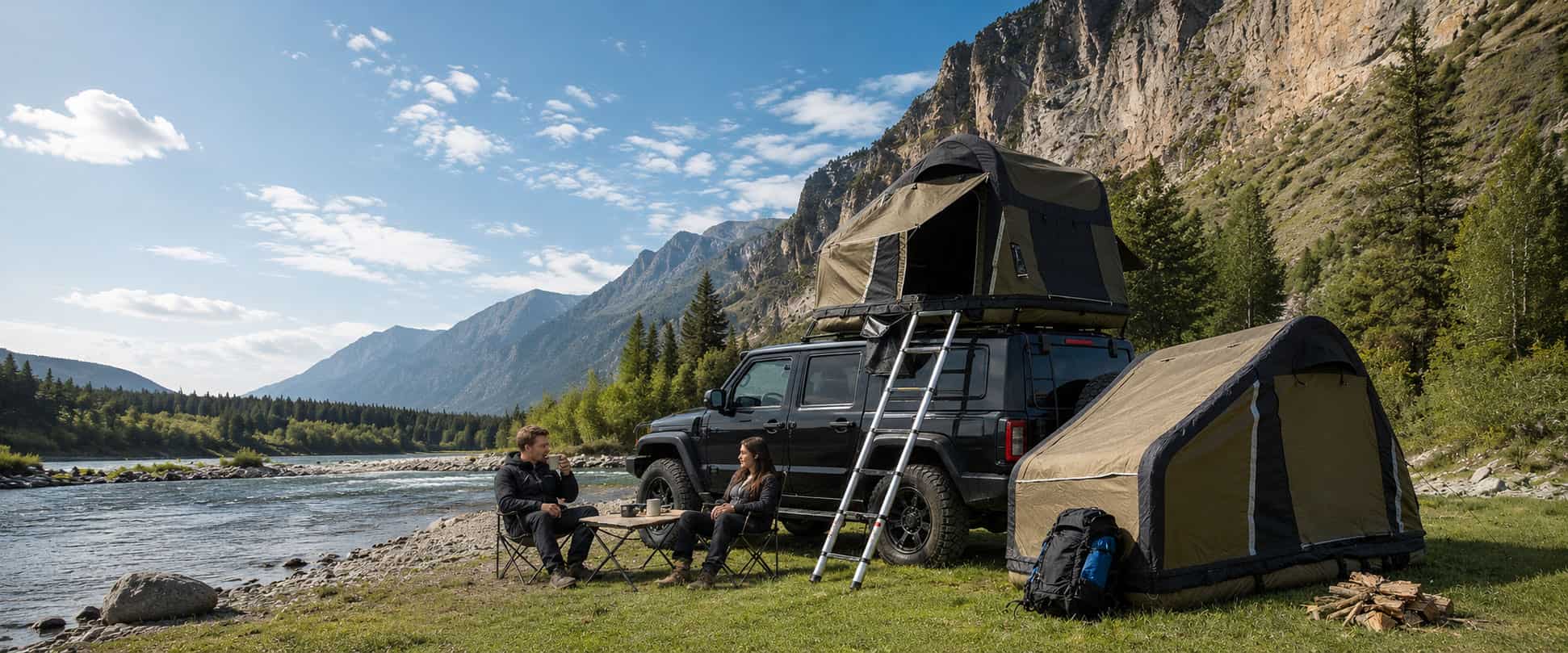
Inflatable Rooftop Tent Supplier Review Points
| Evaluation area | What to check | Why it matters |
|---|---|---|
| Air structure | Beam layout, valve position, recommended pressure, pump method, and isolation between chambers. | Determines how confidently dealers can explain the concept to end users. |
| Fabric and base | Outer fabric, inner layer, base support, seam treatment, and weather discussion points. | Air structure alone is not enough; the textile system carries much of the user experience. |
| Repair support | Patch kit, valve replacement questions, instruction material, and spare part availability. | Inflatable concepts need a more explicit after-sales story than traditional tents. |
| Packing behavior | Deflated size, folding steps, bag strength, carton size, and repeat packing test. | A product that looks good once must also be repacked easily by customers. |
Inflatable Rooftop Tent Buyer Checklist
- Define whether the target buyer is a rental fleet, outdoor retailer, online seller, or brand seeking a novelty product line.
- Request setup media showing inflation, ladder placement, interior access, deflation, and final packing.
- Ask what repair kit, valve details, and customer instructions are available before bulk order.
- Confirm sample testing scope, especially repeated setup and packing by people who did not design the tent.
- Compare packed volume, carton data, and shipment economics against hard shell or soft shell alternatives.
How to Test an Inflatable Rooftop Tent Before Bulk Orders
- Start with a sample and record setup time, inflation pressure, and user mistakes.
- Test the tent on the buyer's common vehicle/rack combination.
- Check fabric tension, valve access, ladder angle, condensation points, and packing repeatability.
- Prepare dealer-facing explanations for repair, pump selection, storage, and warranty handling.
- Only then compare MOQ, packaging, and launch timing with the supplier.
Detailed Sourcing Notes for inflatable rooftop tent supplier
Inflatable Rooftop Tent Supplier Checks for New Product Lines should be reviewed as a complete sourcing path. Buyers should connect the page topic with channel role, vehicle segment, model positioning, packaging pressure, sample expectations, and what their own sales team needs to explain after launch. This keeps the discussion grounded in commercial use instead of turning the page into a keyword-only article.
The first evaluation area is air structure: Beam layout, valve position, recommended pressure, pump method, and isolation between chambers.. This matters because determines how confidently dealers can explain the concept to end users. The second area is fabric and base: Outer fabric, inner layer, base support, seam treatment, and weather discussion points.. For a buyer comparing suppliers, these two points create a more useful conversation than asking for a general catalog or a single lowest price.
Before sample or bulk discussion, the buyer should start with practical preparation: Define whether the target buyer is a rental fleet, outdoor retailer, online seller, or brand seeking a novelty product line. The next step is to request setup media showing inflation, ladder placement, interior access, deflation, and final packing. Then the buyer can ask what repair kit, valve details, and customer instructions are available before bulk order. This sequence gives SUVTent enough context to reply with product information that matches the buyer's actual business model.
The recommended workflow starts when the buyer can start with a sample and record setup time, inflation pressure, and user mistakes. After that, the team should test the tent on the buyer's common vehicle/rack combination. and check fabric tension, valve access, ladder angle, condensation points, and packing repeatability. By the time price, MOQ, and delivery terms are compared, both sides should already understand the product role, buyer risk, and support material needed for a cleaner launch.
Best-Fit Buyer Scenarios for inflatable rooftop tent supplier
This page is most useful for buyers who already have a commercial direction but need to turn that direction into a supplier conversation. For example, one buyer may care most about product education, while another buyer may be trying to solve sample validation. These are not the same inquiry, so the quotation process should not treat them as the same request.
A strong-fit buyer usually brings enough context for SUVTent to understand the real job behind the keyword. That includes the buyer's sales channel, expected model role, target vehicle group, launch timing, and the type of support material needed for dealers or end customers. Without that context, the reply can only stay general; with it, the discussion can move toward model selection, packaging, sample approval, and order planning.
This page is less suitable for buyers who want a one-line price without model direction, vehicle context, or order plan. Rooftop tent sourcing depends on details such as repair support, where buyers need to check Patch kit, valve replacement questions, instruction material, and spare part availability.. The reason is simple: inflatable concepts need a more explicit after-sales story than traditional tents. Those details influence total cost, customer satisfaction, and the amount of after-sales explanation required by the local seller.
If the buyer is ready to move forward, the most useful next message should include three layers. First, confirm sample testing scope, especially repeated setup and packing by people who did not design the tent. Second, compare packed volume, carton data, and shipment economics against hard shell or soft shell alternatives. Third, the buyer should be ready to prepare dealer-facing explanations for repair, pump selection, storage, and warranty handling. and only then compare moq, packaging, and launch timing with the supplier. This creates a cleaner path from web page reading to a serious B2B inquiry.
One common question is: Who should consider inflatable rooftop tents? The practical answer is: Buyers seeking a differentiated line, rental-friendly handling, or a new product story may consider them after sample testing. That answer is included here because real buyers often ask this before they are ready to compare formal quotes, and it gives the page a more useful role than a simple landing section.
inflatable rooftop tent supplier Decision Notes for Procurement Teams
inflatable rooftop tent supplier planning should stay connected to the buyer's real sales channel. When a buyer compares inflatable rooftop tent supplier, the discussion should include air structure, fabric and base, and repair support instead of stopping at a catalog request.
A useful inflatable rooftop tent supplier inquiry also explains why the buyer is sourcing now: new product launch, dealer expansion, OEM branding, replacement of an old supplier, or compatibility support for a specific vehicle segment. This gives SUVTent a better way to match inflatable rooftop tent supplier information with model recommendations, packaging notes, and quote preparation.
For page visitors, the goal of this inflatable rooftop tent supplier section is clarity. It helps buyers decide whether the page answers their current question, which details still need verification, and when to move from reading to a structured B2B inquiry.
Useful Internal Paths for This Buyer Intent
Continue the sourcing path through rooftop tent products, B2B sourcing support, OEM rooftop tent support, and contact SUVTent. These links are included because the next useful action changes by page: product comparison, compatibility screening, OEM discussion, distributor planning, or direct contact.
Verification Notes for inflatable rooftop tent supplier
Inflatable buyers should verify pressure guidance, textile specifications, and repair instructions in writing. For search and AI visibility, structured data can help clarify the page topic, but the content must still answer real buyer questions. Buyers can use the ISO 9001 quality management overview as a question framework and Google's structured data documentation as context for why page entities and FAQs are marked clearly.
FAQ About inflatable rooftop tent supplier
Who should consider inflatable rooftop tents?
Buyers seeking a differentiated line, rental-friendly handling, or a new product story may consider them after sample testing.
What is the biggest buying risk?
The biggest risk is weak customer education. If buyers cannot explain inflation, repair, and packing, the model may create avoidable support pressure.
Can inflatable rooftop tents support private label projects?
Private label can be discussed, but branding should follow sample approval because valve layout, fabric panels, and packaging all affect artwork decisions.
What information should I send to SUVTent?
Send target channel, vehicle type, preferred packed size, order estimate, branding needs, and any setup or repair concerns.
Request Support for inflatable rooftop tent supplier
Ask SUVTent for inflatable rooftop tent structure details, packing size, MOQ, and sample discussion points.