B2B Procurement Guide
How to Source Rooftop Tents for Amazon or Shopify Brands
A sourcing workflow for Amazon and Shopify rooftop tent brands covering product data, oversized fulfilment, packaging, listing assets, support and unit economics.

Direct answer: Amazon or Shopify brands should source rooftop tents backward from the fulfilment route, product-detail promise and post-purchase support load. First verify the exact sellable configuration, final carton dimensions and gross weight; then model inbound, storage, outbound, damage, return and support costs before choosing a selling price or purchase quantity. The supplier data pack should map one model code across quotation, carton, barcode or platform identifier, warehouse record, spare-parts references and listing content. Photography must show the real approved sample, included parts, dimensions, installation boundaries and packaging condition. Platform fields and fulfilment requirements change, so the current account interface and logistics partner must approve them. A good factory price cannot rescue inaccurate listing data or an oversized-delivery workflow that was never tested.
Search intent: Build an e-commerce-ready sourcing and fulfilment brief before buying rooftop tents.
Who this is for: Amazon and Shopify brand owners, e-commerce operators, sourcing managers, 3PL teams and customer-support leaders.
Start With the Fulfilment and Margin Model
Source a marketplace-ready rooftop tent offer by linking product configuration to listing accuracy, oversized fulfilment, review risk, support workload and brand-controlled customer communication. Use the table as a working record: mark each answer as assumption, verified or approved; name the source file; and stop a decision when its evidence does not match the exact configuration under review.
| Decision area | What must be defined | Evidence and red-flag test |
|---|---|---|
| Channel economics | model selling price, referral fees, payment fees, storage, outbound freight, returns, damage allowance, advertising and support cost. | Request 3PL or fulfilment feasibility confirmation. Red flag: listing copy ahead of approved specification. |
| Listing promise | make every dimension, included accessory, material statement, fitment note and setup claim traceable to the approved production specification. | Request identifier and label cross-reference. Red flag: oversized fees omitted from contribution margin. |
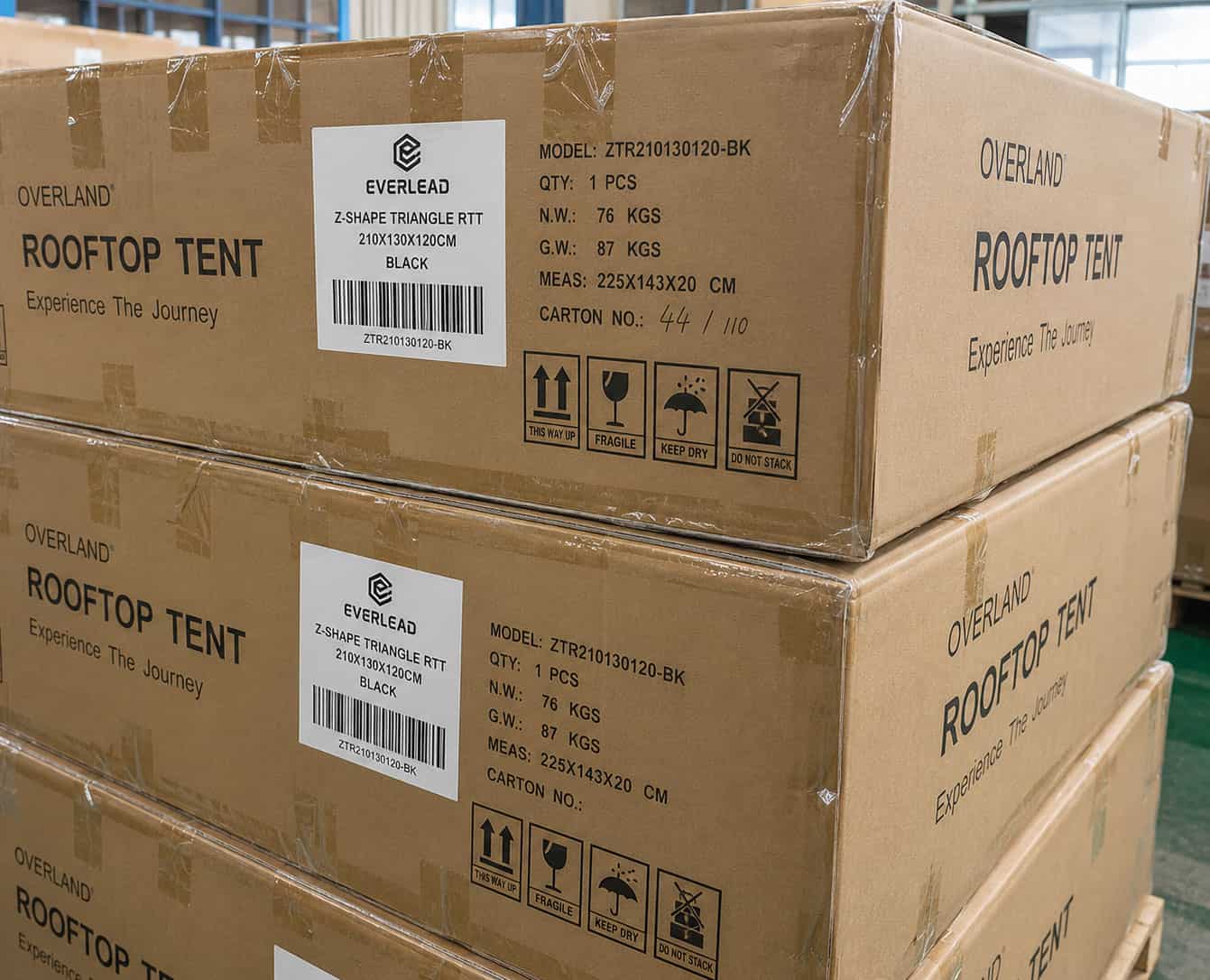
| Carton resilience | review corner protection, compression points, moisture barriers, pallet handling, carrier labels and photographic evidence for oversized delivery claims. | Request prevention controls for likely negative reviews. Red flag: variant names inconsistent across systems. |
| Variant discipline | limit colors and configurations until traffic, conversion and return data justify additional listing complexity or separate inventory codes. | Request ticket taxonomy and parts-dispatch workflow. Red flag: installation questions answered by generic scripts. |
| Image sequence | plan closed profile, open configuration, interior, dimensions, included parts, vehicle context, installation boundaries and packaging condition visuals. | Request launch-stock assumptions and reorder trigger. Red flag: carrier damage without receiving photographs. |
| Customer questions | prepare answers for rack compatibility, roof loads, installation time, mattress, weather care, condensation, storage and replacement components. | Request return, review and support feedback report. Red flag: replacement parts lacking marketplace identifiers. |
| Fulfilment path | compare marketplace fulfilment, third-party logistics, regional warehouse and merchant shipment against carton size, handling skill and delivery appointment needs. | Request 3PL or fulfilment feasibility confirmation. Red flag: inventory spread across slow color variants. |
| Barcode control | align model code, carton label, platform identifier, warehouse record, spare-parts reference and customer-facing variant name before shipment. | Request identifier and label cross-reference. Red flag: review feedback not routed to product control. |
| Review prevention | convert likely one-star triggers such as missing hardware, unclear instructions, freight damage and fitment confusion into pre-shipment controls. | Request prevention controls for likely negative reviews. Red flag: listing copy ahead of approved specification. |
| Support workflow | define ticket categories, required photos, response templates, parts dispatch, return authorization and escalation ownership across time zones. | Request ticket taxonomy and parts-dispatch workflow. Red flag: oversized fees omitted from contribution margin. |
| Launch inventory | use conversion assumptions, lead time, replenishment interval and regional stock placement instead of buying a broad catalogue range. | Request launch-stock assumptions and reorder trigger. Red flag: variant names inconsistent across systems. |
| Data feedback | connect search terms, abandoned carts, customer questions, return reasons, review language and support tickets to the next product revision. | Request return, review and support feedback report. Red flag: installation questions answered by generic scripts. |
Build the E-commerce Sourcing Workflow
Step 1: Channel economics
model selling price, referral fees, payment fees, storage, outbound freight, returns, damage allowance, advertising and support cost. Record the current assumption, responsible owner and the event that turns it into an approved decision.
Decision output: A contribution-margin sheet with every channel and logistics cost category.
Step 2: Listing promise
make every dimension, included accessory, material statement, fitment note and setup claim traceable to the approved production specification. Make the result usable by the next team instead of leaving it in a sales conversation.
Decision output: A claim register linking listing statements to approved source data.
Step 3: Carton resilience
review corner protection, compression points, moisture barriers, pallet handling, carrier labels and photographic evidence for oversized delivery claims. If the answer changes stock, safety, cost or customer communication, require written approval.
Decision output: A packaging review focused on oversized handling and receiving evidence.
Step 4: Variant discipline
limit colors and configurations until traffic, conversion and return data justify additional listing complexity or separate inventory codes. Link the decision to the exact model, sample or file revision so a later team can reproduce it.
Decision output: A controlled variant map linking names, identifiers and physical stock.
Step 5: Image sequence
plan closed profile, open configuration, interior, dimensions, included parts, vehicle context, installation boundaries and packaging condition visuals. Define what evidence closes the item and when it must be reviewed again.
Decision output: A shot list for configuration, dimensions, parts, installation and packaging.
Step 6: Customer questions
prepare answers for rack compatibility, roof loads, installation time, mattress, weather care, condensation, storage and replacement components. Test the process with real staff before it becomes a public or contractual promise.
Decision output: A customer-question library built before traffic is purchased.
Listing, Warehouse and Support Evidence to Collect
For amazon and shopify brand owners, e-commerce operators, sourcing managers, 3pl teams and customer-support leaders., evidence should survive staff changes, shipment arrival and customer claims. Store it by model and revision, not only by supplier name. Commercial estimates remain conditional until the approved quotation, sample and final packing records agree.
Fulfilment path
compare marketplace fulfilment, third-party logistics, regional warehouse and merchant shipment against carton size, handling skill and delivery appointment needs.
Evidence to request: 3PL or fulfilment feasibility confirmation. If the file, sample, photograph or responsible owner cannot be named, keep the point marked as an assumption.
Barcode control
align model code, carton label, platform identifier, warehouse record, spare-parts reference and customer-facing variant name before shipment.
Evidence to request: identifier and label cross-reference. If the file, sample, photograph or responsible owner cannot be named, keep the point marked as an assumption.
Review prevention
convert likely one-star triggers such as missing hardware, unclear instructions, freight damage and fitment confusion into pre-shipment controls.
Evidence to request: prevention controls for likely negative reviews. If the file, sample, photograph or responsible owner cannot be named, keep the point marked as an assumption.
Support workflow
define ticket categories, required photos, response templates, parts dispatch, return authorization and escalation ownership across time zones.
Evidence to request: ticket taxonomy and parts-dispatch workflow. If the file, sample, photograph or responsible owner cannot be named, keep the point marked as an assumption.
Launch inventory
use conversion assumptions, lead time, replenishment interval and regional stock placement instead of buying a broad catalogue range.
Evidence to request: launch-stock assumptions and reorder trigger. If the file, sample, photograph or responsible owner cannot be named, keep the point marked as an assumption.
Data feedback
connect search terms, abandoned carts, customer questions, return reasons, review language and support tickets to the next product revision.
Evidence to request: return, review and support feedback report. If the file, sample, photograph or responsible owner cannot be named, keep the point marked as an assumption.

Illustrative Contribution-Margin Worksheet
Illustrative example: use the formula contribution per order = net selling revenue − product landed cost − channel fees − storage − outbound delivery − advertising − payment cost − expected damage/return allowance − support cost. Keep every input in its own cell and label the date and source. Do not hide oversized delivery inside a single freight estimate.
| Data owner | Required file | Approval question |
|---|---|---|
| Supplier | Approved specification, carton data, included-parts list and media pack. | Does the content describe the exact configuration being purchased? |
| 3PL / carrier | Receiving, storage, handling and delivery feasibility. | Can the final carton move through the selected route without unsupported assumptions? |
| Marketplace / store team | Current listing fields, identifiers, variants and policy checks. | Do platform records match the warehouse SKU and physical carton? |
| Support team | Troubleshooting, evidence request and parts workflow. | Can a remote agent resolve common questions without guessing? |
E-commerce Failure Triggers
Red flags are useful only when they trigger action. Assign every risk to a buyer or supplier owner, define the evidence required to close it and review unresolved items before sample approval, deposit, production release and shipment.
- To prevent listing copy ahead of approved specification, define a responsible owner, the control action and the closure record required before approval.
- To prevent oversized fees omitted from contribution margin, define a responsible owner, the control action and the closure record required before approval.
- To prevent variant names inconsistent across systems, define a responsible owner, the control action and the closure record required before approval.
- To prevent installation questions answered by generic scripts, define a responsible owner, the control action and the closure record required before approval.
- To prevent carrier damage without receiving photographs, define a responsible owner, the control action and the closure record required before approval.
- To prevent replacement parts lacking marketplace identifiers, define a responsible owner, the control action and the closure record required before approval.
- To prevent inventory spread across slow color variants, define a responsible owner, the control action and the closure record required before approval.
- To prevent review feedback not routed to product control, define a responsible owner, the control action and the closure record required before approval.
Final Online-Brand Sourcing Checklist
Use this final list as an approval record. A checked item means the exact model, unit, condition, source and revision are documented—not merely discussed.
- Channel economics: model selling price, referral fees, payment fees, storage, outbound freight, returns, damage allowance, advertising and support cost.
- Listing promise: make every dimension, included accessory, material statement, fitment note and setup claim traceable to the approved production specification.
- Carton resilience: review corner protection, compression points, moisture barriers, pallet handling, carrier labels and photographic evidence for oversized delivery claims.
- Variant discipline: limit colors and configurations until traffic, conversion and return data justify additional listing complexity or separate inventory codes.
- Image sequence: plan closed profile, open configuration, interior, dimensions, included parts, vehicle context, installation boundaries and packaging condition visuals.
- Customer questions: prepare answers for rack compatibility, roof loads, installation time, mattress, weather care, condensation, storage and replacement components.
- Fulfilment path: compare marketplace fulfilment, third-party logistics, regional warehouse and merchant shipment against carton size, handling skill and delivery appointment needs.
- Barcode control: align model code, carton label, platform identifier, warehouse record, spare-parts reference and customer-facing variant name before shipment.
- Review prevention: convert likely one-star triggers such as missing hardware, unclear instructions, freight damage and fitment confusion into pre-shipment controls.
- Support workflow: define ticket categories, required photos, response templates, parts dispatch, return authorization and escalation ownership across time zones.
- Launch inventory: use conversion assumptions, lead time, replenishment interval and regional stock placement instead of buying a broad catalogue range.
- Data feedback: connect search terms, abandoned carts, customer questions, return reasons, review language and support tickets to the next product revision.
Sources and Methodology
For the intent “Build an e-commerce-ready sourcing and fulfilment brief before buying rooftop tents.”, this guide combines the SUVTent rooftop tent project knowledge base, current internal product briefs and the sources below. Advice is identified as a decision method; numerical examples are labelled illustrative or tied to the stated specification brief. Certifications, MOQ, lead time, warranty, loading quantity and commercial terms are not treated as confirmed unless the selected model and approved project documents support them.
- Amazon Sell: https://sell.amazon.com/blog/amazon-product-listings
- Shopify Help Center: https://help.shopify.com/en/manual/products/import-export/using-csv
- GS1: https://www.gs1.org/standards/id-keys/gtin
About the supplier: EVERLEAD is the product brand used by Guangdong Jituo Outdoor Products Co., Ltd. For amazon and shopify brand owners, e-commerce operators, sourcing managers, 3pl teams and customer-support leaders., the relevant B2B discussions may involve rooftop tents, camping shelters and related outdoor products. Wholesale, private-label, OEM and ODM scope is confirmed by selected model and approved project requirements.
Buyer FAQ
Should a rooftop tent brand use marketplace fulfilment or a 3PL?
Compare the final carton, handling capability, delivery appointment needs, storage, return route and current platform rules. The best route is configuration- and market-specific.
What product media should the supplier provide?
Request closed and open views, interior, dimensions, included parts, hardware, installation boundaries, packaging condition and approved configuration references.
How should variants be controlled?
Use one cross-reference connecting customer-facing name, model code, identifier, carton label, warehouse SKU and spare-parts version.
Can listing requirements be copied from an old launch?
No. Check current Amazon Seller Central or Shopify documentation and the active fulfilment account because fields and operational requirements can change.
What is an e-commerce-ready data pack?
It is a controlled set of specifications, identifiers, images, included contents, carton data, support information and revision records for one approved configuration.