Comparison Article for B2B buyers
Side-Open vs Wedge Rooftop Tents
Explore side-open vs wedge rooftop tents for Distributors / Product Managers. Get product options, sourcing notes, OEM/ODM support, and request a catalog o
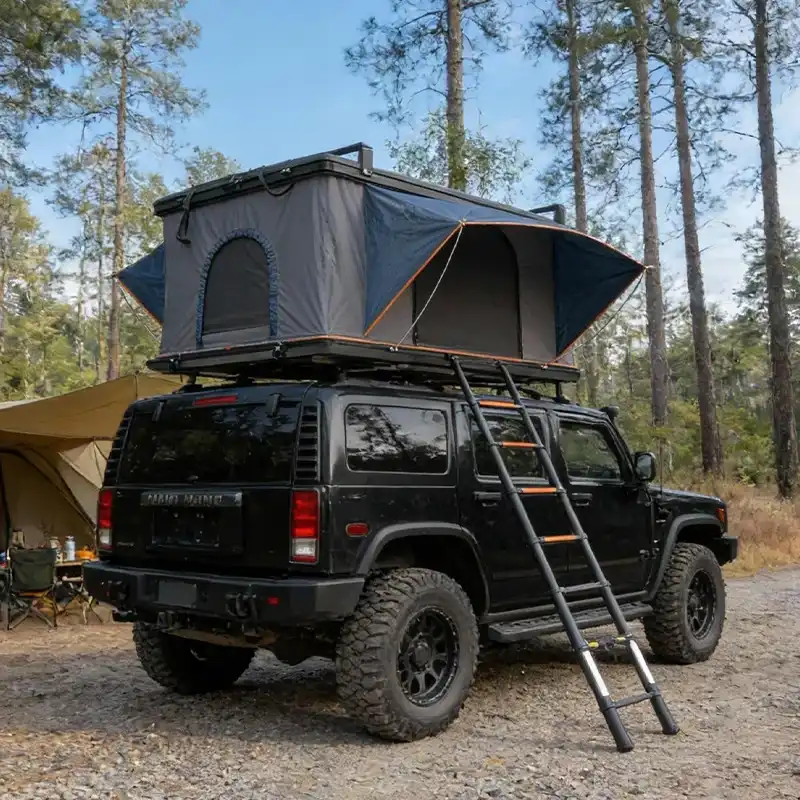
Direct answer: Choose a side-open rooftop tent when the target buyer values a wider sleeping deck, a room-like campsite experience and side access that can support family or comfort-led merchandising. Choose a wedge when fast touring routines, a low travel profile and a clearly directional sleeping layout matter more. The buyer must also compare open footprint, ladder corridor, vehicle-door or awning conflicts, closing steps, fabric area, rack interface, carton size and aftersales parts. A product photo cannot reveal these operational differences. Set up both production-style samples beside a representative vehicle, map the occupied ground and roof zones, and document the exact customer for each. All dimensions, weights, capacities and weather claims remain model-specific and must be verified.
How to Compare Side-Open vs Wedge Rooftop Tents for a B2B Product Line
This guide helps Distributors / Product Managers turn a broad sourcing question into a practical product decision. Compare the target market, sales channel, product family, sample scope, packaging requirements and order plan before using price as the final filter.
SUVTent / EVERLEAD supports rooftop tent and outdoor product sourcing discussions for distributors, retailers and private label brands. A useful inquiry connects product interest with market requirements, estimated quantity and the details that must be checked before approval.
Range Position
Decide which option is the premium anchor, which broadens the assortment and whether both deserve a sample slot.
Operational Risk
Compare setup training, packaging, spare parts, troubleshooting and the questions dealers must answer after the sale.
Sample Evidence
Use side-by-side setup, packing, structure and accessory checks to turn product preference into a documented buying decision.
Practical Buyer Review Notes
Side-Open vs Wedge Rooftop Tents should be reviewed through the buyer's channel, market, product role, sample needs, packaging expectations and order plan.
| Focus Area | Buyer Review Point |
|---|---|
| Buyer context | Clarify market, channel, product role and expected order path. |
| Product details | Review model structure, materials, packaging, sample questions and support needs. |
| Quote path | Send quantity range, destination, timeline and any branding requirements. |
Practical Review Points
- buyer role
- market fit
- sample plan
- quote details
- packaging needs
- product shortlist
- order timing
- support materials
Market Context and Buyer Language
Market demand often includes hard shell roof top tent manufacturer and aluminum tents / car side awnings. Use this context to ask for the right product family, sample path, packaging information and quote detail.
Dealers should translate broad comparison language such as side open wedge rooftop tent, rooftop tent comparison, buyer guide into questions that can be checked during sample review.
- Which product structure is easiest for the target customer to understand and use?
- What must sales staff demonstrate before recommending the product?
- Which replacement parts, instructions and troubleshooting steps will the channel need?
- How do packed size, carton protection and handling affect the order plan?
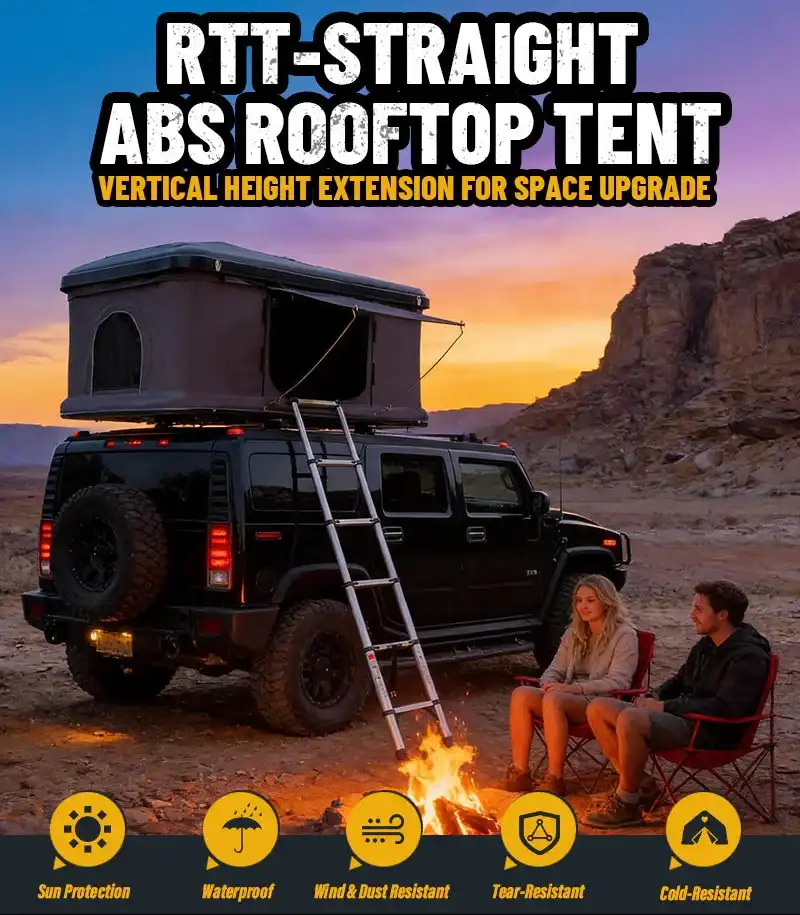
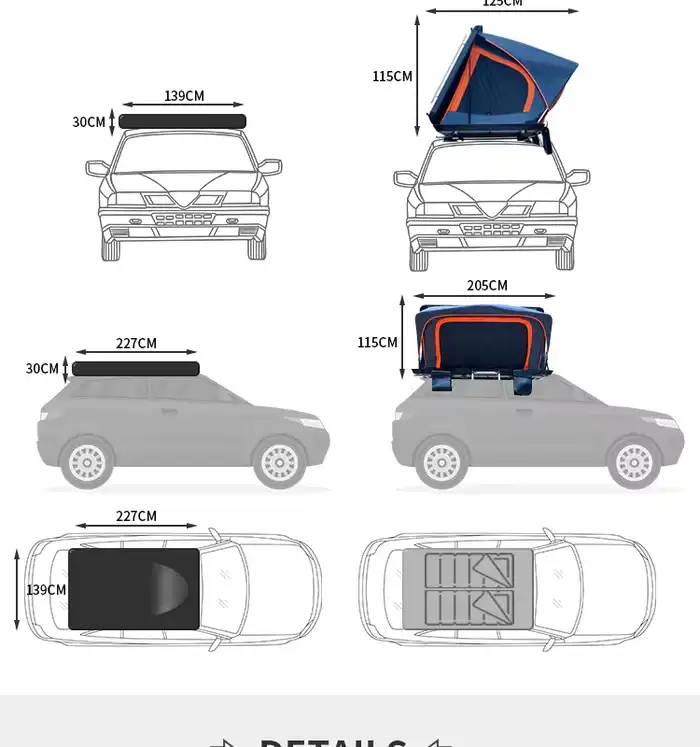
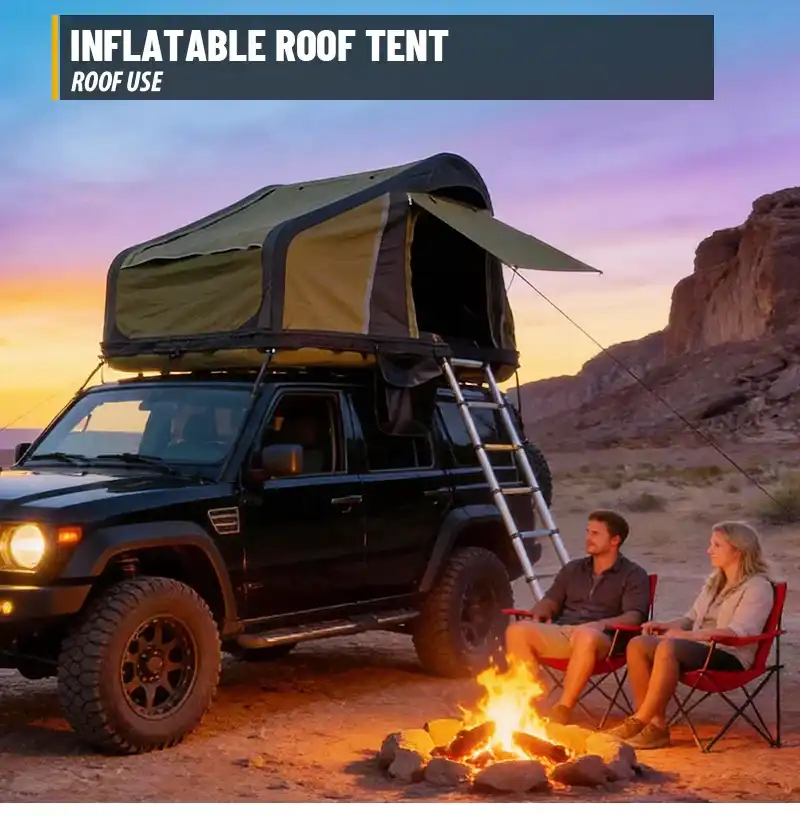
Wholesale, OEM and Sample Planning
Start with the lowest-risk decision that can be verified. Confirm the product direction, prepare a focused sample request, review structure and accessories, then define packaging, labels, manuals, spare parts and shipment assumptions before scaling.
For wholesale, compare available models and channel fit. For private label, add logo position, color direction and packaging artwork. For deeper OEM or ODM work, separate cosmetic changes from structural changes so the sample path and approval responsibility remain clear.
What to include in the first message
- Destination country and sales channel.
- Product family or use case being compared.
- Estimated sample and bulk quantity.
- Branding, packaging, manual and label requirements.
- Questions about fitment, accessories, spare parts or after-sales support.
Campsite Spatial-Conflict Audit
Use a scaled overhead drawing to locate the vehicle body, side doors, rear hatch, ladder feet, guy points, awning edge, cooking zone, chair zone and neighboring pitch boundary. A side-opening platform can move the sleeping deck toward the same side used by a kitchen or awning; a wedge may preserve that side but create a different rear-entry corridor. Mark collision points and the order in which camp components are deployed. The output is a route map for people and equipment, not merely an open-dimension table. Photograph the approved sample with measurement markers so dealer staff can reproduce the explanation.
Night-Access and Egress Observation
Observe entry after dark with the representative ladder, footwear location, interior lighting, sleeping orientation and vehicle doors in their expected positions. Record handholds, first and last steps, head or foot turns, gear obstructions and the route from tent to ground. Do not publish a safety ranking from one observation. Instead, identify which customer mobility, campsite and supervision questions belong in the intake. Side-entry and end-entry geometries create different movements, so the dealer handover and demonstration should be tailored rather than shared.
Camp-Furniture and Social-Zone Plan
Family and comfort buyers often evaluate the shelter as part of a living area. Place a table, chairs, storage boxes and a representative cooking setup around each deployed sample without blocking ladder or vehicle access. Map shade, rain runoff and fabric drip lines. The side-open model may support a porch-like arrangement, while the wedge may favor a narrower touring footprint; the exact outcome depends on product geometry and other accessories. This spatial-merchandising method gives sales teams a visible, repeatable distinction that does not rely on unsupported capacity or convenience claims.
Coordinate Grid for Dealer Drawings
Give every spatial observation a coordinate rather than writing beside the tent. Establish a vehicle centerline, front axle reference, roof origin and ground-plane grid. Plot shell edges, deployed platform, ladder feet, door arcs, hatch envelope, awning posts and guy anchors in the same drawing. Record units, scale, vehicle, rack and sample revision. This lets another store reproduce the layout and compare an alternative model without redrawing from photographs. It also exposes left-hand versus right-hand opening implications for markets with different curbside, campsite or traffic-side preferences.
Fabric-Panel Kinematics During Closure
Study how wall panels, window covers, insect mesh, rainfly edges and internal straps move as the side-open platform folds or the wedge shell closes. Mark pinch lines, bunching zones, zipper pressure, corners requiring manual tucking and places where bedding changes the fold. Use slow video and still frames from the approved sample. The objective is not to rank convenience from one operator; it is to prepare accurate closing instruction, identify training points and define inspection locations for abrasion or trapped fabric. The two geometries create distinct panel paths that should not share a generic closing card.
Left-Right Opening and Curbside Merchandising
A distributor should decide whether opening direction affects roadside demonstrations, campsite boundaries, dealer display and customer access in its markets. Record steering side, common curbside loading behavior, parking layout and awning placement as commercial context, not as a legal conclusion. A side-opening model may project into a desired or undesirable side; a wedge may avoid that projection but place entry elsewhere. Create separate photographs and catalog diagrams for each approved orientation. Do not mirror an image digitally if brackets, hinges, doors or actual availability do not match the mirrored product.
Wet-Fabric Isolation and Departure Sequence
After rain, map which exterior panels, skirts, poles, straps and ladder surfaces can contact bedding, shell, vehicle paint or stored accessories during pack-down. Define absorbent cloths, temporary barriers, wet-item bags and the earliest safe reopening point according to approved care guidance. Side-open and wedge constructions can trap moisture in different folds and perimeter channels. The dealer should teach a departure sequence and a later drying sequence, with responsibility transferred to the customer at handover. This topic-specific procedure is more useful than a generic instruction to dry the tent.
Decision Controls and Evidence
Select between campsite living space and compact touring behavior for a defined dealer customer. The commercial decision should be understandable to purchasing, sales, operations and aftersales teams, because each group sees a different part of the risk. A useful plan therefore connects the customer proposition to measurable product data, an approval path and a follow-up date.
Use the following control table as a working brief, not as generic reading. Replace each assumption with destination-market evidence, identify the file or sample that supports the answer and record who may approve a change. SUVTent / EVERLEAD can then respond to a defined sourcing case instead of guessing from a broad request.
| Decision control | What the buying team should define |
|---|---|
| Campsite footprint | draw the deployed roof, ladder and ground-clearance envelope for side-open and wedge samples. |
| Sleeping layout | compare deck width, mattress orientation, edge access, occupant movement and usable headroom zones. |
| Vehicle interaction | test doors, tailgate, rear hatch, side awning, roof accessories and parked-neighbor clearance. |
| Entry corridor | inspect ladder angle, hand placement, night access and space for shoes or gear below the entrance. |
| Setup rhythm | record unfolding, support poles, strut lift, fabric management, bedding and closing tasks. |
| Fabric exposure | compare wall area, windows, rainfly or canopy components and the approved wet-storage routine. |
| Travel profile | verify closed height, length, width and visual roofline with the selected mounting arrangement. |
| Carton plan | request final pack dimensions, gross weight, lift points, stacking rule and handling photos. |
| Service inventory | separate platform hinges, poles and travel-cover parts from wedge struts, latches and perimeter seals. |
| Retail story | position one as campsite-space led and the other as touring-routine led using evidence staff can demonstrate. |
| Sample handover | record included accessories, manuals, labels, mounting kit and known compatibility questions. |
| Stock decision | connect each format to enquiries, display capacity and service readiness before allocating units. |
Working sequence before commercial approval
1. Campsite footprint
draw the deployed roof, ladder and ground-clearance envelope for side-open and wedge samples. Put the decision into a shared working record and name the person who can approve it. The record should show the current assumption, the evidence still required, the consequence of a wrong answer and the exact point at which the buyer will review it again. This prevents an early sales conversation from quietly becoming an uncontrolled production, inventory or customer-service commitment.
2. Sleeping layout
compare deck width, mattress orientation, edge access, occupant movement and usable headroom zones. Put the decision into a shared working record and name the person who can approve it. The record should show the current assumption, the evidence still required, the consequence of a wrong answer and the exact point at which the buyer will review it again. This prevents an early sales conversation from quietly becoming an uncontrolled production, inventory or customer-service commitment.
3. Vehicle interaction
test doors, tailgate, rear hatch, side awning, roof accessories and parked-neighbor clearance. Put the decision into a shared working record and name the person who can approve it. The record should show the current assumption, the evidence still required, the consequence of a wrong answer and the exact point at which the buyer will review it again. This prevents an early sales conversation from quietly becoming an uncontrolled production, inventory or customer-service commitment.
4. Entry corridor
inspect ladder angle, hand placement, night access and space for shoes or gear below the entrance. Put the decision into a shared working record and name the person who can approve it. The record should show the current assumption, the evidence still required, the consequence of a wrong answer and the exact point at which the buyer will review it again. This prevents an early sales conversation from quietly becoming an uncontrolled production, inventory or customer-service commitment.
5. Setup rhythm
record unfolding, support poles, strut lift, fabric management, bedding and closing tasks. Put the decision into a shared working record and name the person who can approve it. The record should show the current assumption, the evidence still required, the consequence of a wrong answer and the exact point at which the buyer will review it again. This prevents an early sales conversation from quietly becoming an uncontrolled production, inventory or customer-service commitment.
6. Fabric exposure
compare wall area, windows, rainfly or canopy components and the approved wet-storage routine. Put the decision into a shared working record and name the person who can approve it. The record should show the current assumption, the evidence still required, the consequence of a wrong answer and the exact point at which the buyer will review it again. This prevents an early sales conversation from quietly becoming an uncontrolled production, inventory or customer-service commitment.
Evidence pack and operating handoff
7. Evidence for travel profile
verify closed height, length, width and visual roofline with the selected mounting arrangement. Ask for a document, photograph, approved sample reference, measurement sheet or responsible contact that makes the answer reviewable. Purchasing and channel teams should be able to return to that evidence after staff changes, shipment arrival or a customer claim. If the evidence cannot be named, the point remains an assumption and should not be repeated as a confirmed product promise.
8. Evidence for carton plan
request final pack dimensions, gross weight, lift points, stacking rule and handling photos. Ask for a document, photograph, approved sample reference, measurement sheet or responsible contact that makes the answer reviewable. Purchasing and channel teams should be able to return to that evidence after staff changes, shipment arrival or a customer claim. If the evidence cannot be named, the point remains an assumption and should not be repeated as a confirmed product promise.
9. Evidence for service inventory
separate platform hinges, poles and travel-cover parts from wedge struts, latches and perimeter seals. Ask for a document, photograph, approved sample reference, measurement sheet or responsible contact that makes the answer reviewable. Purchasing and channel teams should be able to return to that evidence after staff changes, shipment arrival or a customer claim. If the evidence cannot be named, the point remains an assumption and should not be repeated as a confirmed product promise.
10. Evidence for retail story
position one as campsite-space led and the other as touring-routine led using evidence staff can demonstrate. Ask for a document, photograph, approved sample reference, measurement sheet or responsible contact that makes the answer reviewable. Purchasing and channel teams should be able to return to that evidence after staff changes, shipment arrival or a customer claim. If the evidence cannot be named, the point remains an assumption and should not be repeated as a confirmed product promise.
11. Evidence for sample handover
record included accessories, manuals, labels, mounting kit and known compatibility questions. Ask for a document, photograph, approved sample reference, measurement sheet or responsible contact that makes the answer reviewable. Purchasing and channel teams should be able to return to that evidence after staff changes, shipment arrival or a customer claim. If the evidence cannot be named, the point remains an assumption and should not be repeated as a confirmed product promise.
12. Evidence for stock decision
connect each format to enquiries, display capacity and service readiness before allocating units. Ask for a document, photograph, approved sample reference, measurement sheet or responsible contact that makes the answer reviewable. Purchasing and channel teams should be able to return to that evidence after staff changes, shipment arrival or a customer claim. If the evidence cannot be named, the point remains an assumption and should not be repeated as a confirmed product promise.
Common failure points to control
A long checklist is valuable only when it changes a decision. Review the risks below during sample approval, quotation confirmation and pre-shipment preparation. Close each item with a named record rather than a verbal assurance.
- Control: Avoid open footprint omitted from sales sheet. Record the preventive check, owner and closure evidence before the related order milestone.
- Control: Avoid ladder blocks a common vehicle access point. Record the preventive check, owner and closure evidence before the related order milestone.
- Control: Avoid side-open fabric tasks understated. Record the preventive check, owner and closure evidence before the related order milestone.
- Control: Avoid wedge headroom generalized. Record the preventive check, owner and closure evidence before the related order milestone.
- Control: Avoid carton size confused with closed size. Record the preventive check, owner and closure evidence before the related order milestone.
- Control: Avoid service parts combined into one generic kit. Record the preventive check, owner and closure evidence before the related order milestone.
- Control: Avoid wet close-down guidance absent. Record the preventive check, owner and closure evidence before the related order milestone.
- Control: Avoid two SKUs lack separate customer jobs. Record the preventive check, owner and closure evidence before the related order milestone.
Review rhythm after the first order
After launch or shipment, compare the original assumptions with enquiries, quotations, sell-through, installation feedback, receiving condition, support tickets and reorder timing. Separate product issues from packaging, training, fitment and communication issues. Update the data sheet, sales material, inspection focus and spare-parts plan when evidence changes. This review rhythm makes the next order more accurate and gives both buyer and supplier a clear record of what has been learned.
Worked Example
Illustrative campsite map: a retailer tapes the deployed boundaries of both samples on its floor and places a ladder, vehicle-door arc, chair and awning edge in the marked zones. Staff identify where customers would move, enter and store gear. The side-open model earns a comfort-led role; the wedge earns a rapid-touring role. The exercise is a merchandising method, not a compatibility claim, and final measurements come from the approved samples.
Red Flags and Common Mistakes
Stop approval when evidence does not match the exact model, revision, unit or stated condition. A verbal assurance does not close a red flag; request the named specification, sample record, drawing, test report, packing file or corrective-action record.
Final Actionable Checklist
- Campsite footprint: draw the deployed roof, ladder and ground-clearance envelope for side-open and wedge samples.
- Sleeping layout: compare deck width, mattress orientation, edge access, occupant movement and usable headroom zones.
- Vehicle interaction: test doors, tailgate, rear hatch, side awning, roof accessories and parked-neighbor clearance.
- Entry corridor: inspect ladder angle, hand placement, night access and space for shoes or gear below the entrance.
- Setup rhythm: record unfolding, support poles, strut lift, fabric management, bedding and closing tasks.
- Fabric exposure: compare wall area, windows, rainfly or canopy components and the approved wet-storage routine.
- Travel profile: verify closed height, length, width and visual roofline with the selected mounting arrangement.
- Carton plan: request final pack dimensions, gross weight, lift points, stacking rule and handling photos.
- Service inventory: separate platform hinges, poles and travel-cover parts from wedge struts, latches and perimeter seals.
- Retail story: position one as campsite-space led and the other as touring-routine led using evidence staff can demonstrate.
- Sample handover: record included accessories, manuals, labels, mounting kit and known compatibility questions.
- Stock decision: connect each format to enquiries, display capacity and service readiness before allocating units.
Sources and Methodology
This guide uses the approved SUVTent project knowledge base and the primary project records listed below. Numerical and performance statements remain unconfirmed unless the exact model, unit, source version and applicable condition are shown. Illustrative examples are decision methods, not specifications or commercial promises.
- Approved open and closed dimension sheet
- Production-style vehicle interaction trial
- Model-specific packing and service-parts records
FAQ
Which format gives more sleeping room?
Compare approved open dimensions and the usable mattress deck; the format name alone is insufficient.
Can a side-open tent conflict with an awning?
Yes, depending on opening direction and vehicle layout. Map both systems before selection.
Does a wedge reduce campsite footprint?
Often the roof deployment is compact, but the ladder and entry zone still require measured clearance.
What should a sample test include?
Include vehicle interaction, entry, sleeping layout, opening, closing, wet-care routine, packing and service-part identification.