Comparison Article for B2B buyers
Aluminum vs ABS Rooftop Tent Shells
Explore aluminum vs abs rooftop tent shells for Distributors / Product Managers. Get product options, sourcing notes, OEM/ODM support, and request a catalo
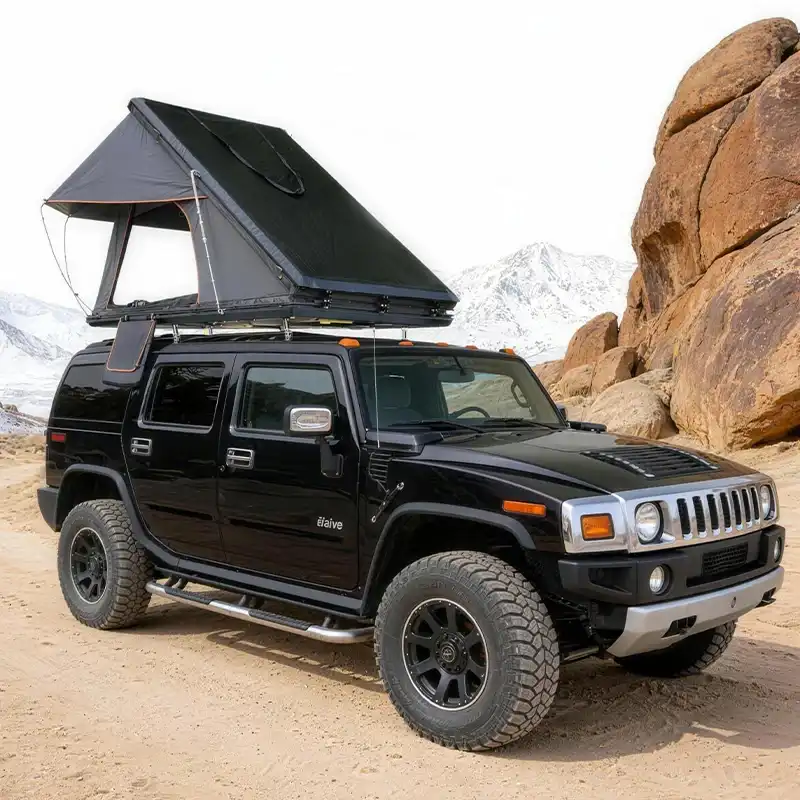
Direct answer: Choose an aluminum rooftop-tent shell when the product brief prioritizes a metal construction story, rigid accessory interfaces, a rugged premium appearance and serviceable hardware attached to a controlled frame. Choose an ABS shell when molded shape, smooth styling, weight distribution and a design-led retail position better fit the selected model. Material name alone cannot prove strength, weight, heat behavior, UV resistance or longevity. Those outcomes depend on panel design, thickness, reinforcement, finish, fasteners, seals and production control. B2B buyers should compare approved samples and material specifications, inspect edges and mounting points, and request repair and revision information. Keep any performance or durability conclusion conditional until model-specific evidence supports it.
How to Compare Aluminum vs ABS Rooftop Tent Shells for a B2B Product Line
This guide helps Distributors / Product Managers turn a broad sourcing question into a practical product decision. Compare the target market, sales channel, product family, sample scope, packaging requirements and order plan before using price as the final filter.
SUVTent / EVERLEAD supports rooftop tent and outdoor product sourcing discussions for distributors, retailers and private label brands. A useful inquiry connects product interest with market requirements, estimated quantity and the details that must be checked before approval.
Range Position
Decide which option is the premium anchor, which broadens the assortment and whether both deserve a sample slot.
Operational Risk
Compare setup training, packaging, spare parts, troubleshooting and the questions dealers must answer after the sale.
Sample Evidence
Use side-by-side setup, packing, structure and accessory checks to turn product preference into a documented buying decision.
Practical Buyer Review Notes
Aluminum vs ABS Rooftop Tent Shells should be reviewed through the buyer's channel, market, product role, sample needs, packaging expectations and order plan.
| Focus Area | Buyer Review Point |
|---|---|
| Buyer context | Clarify market, channel, product role and expected order path. |
| Product details | Review model structure, materials, packaging, sample questions and support needs. |
| Quote path | Send quantity range, destination, timeline and any branding requirements. |
Practical Review Points
- buyer role
- market fit
- sample plan
- quote details
- packaging needs
- product shortlist
- order timing
- support materials
Market Context and Buyer Language
market compares aluminum shells with ABS/plastic or fabric-based soft shell tents. Use this context to ask for the right product family, sample path, packaging information and quote detail.
Dealers should translate broad comparison language such as aluminum ABS rooftop tent, rooftop tent comparison, buyer guide into questions that can be checked during sample review.
- Which product structure is easiest for the target customer to understand and use?
- What must sales staff demonstrate before recommending the product?
- Which replacement parts, instructions and troubleshooting steps will the channel need?
- How do packed size, carton protection and handling affect the order plan?


Wholesale, OEM and Sample Planning
Start with the lowest-risk decision that can be verified. Confirm the product direction, prepare a focused sample request, review structure and accessories, then define packaging, labels, manuals, spare parts and shipment assumptions before scaling.
For wholesale, compare available models and channel fit. For private label, add logo position, color direction and packaging artwork. For deeper OEM or ODM work, separate cosmetic changes from structural changes so the sample path and approval responsibility remain clear.
What to include in the first message
- Destination country and sales channel.
- Product family or use case being compared.
- Estimated sample and bulk quantity.
- Branding, packaging, manual and label requirements.
- Questions about fitment, accessories, spare parts or after-sales support.
Decision Controls and Evidence
Select shell material by product architecture, finish control, repair logic, accessory integration and channel position. The commercial decision should be understandable to purchasing, sales, operations and aftersales teams, because each group sees a different part of the risk. A useful plan therefore connects the customer proposition to measurable product data, an approval path and a follow-up date.
Use the following control table as a working brief, not as generic reading. Replace each assumption with destination-market evidence, identify the file or sample that supports the answer and record who may approve a change. SUVTent / EVERLEAD can then respond to a defined sourcing case instead of guessing from a broad request.
| Decision control | What the buying team should define |
|---|---|
| Shell architecture | document aluminum panel, extrusion and joint construction versus ABS molding, reinforcement and bonded or fastened interfaces. |
| Surface finish | inspect coating, texture, color consistency, scratches, gloss, mold lines and edge neatness under controlled light. |
| Attachment design | verify where racks, solar mounts or accessories may connect without assuming every shell carries external loads. |
| Thermal review | request model-specific material and test evidence rather than converting touch temperature into a durability claim. |
| Water path | compare perimeter seals, drains, joints, fastener penetrations and closing pressure on production-style samples. |
| Impact response | define inspection and repair steps for dents, cracks, coating damage, distorted edges and compromised mounting points. |
| Fastener system | record inserts, rivets, bolts, hinge mounts and service access with torque or assembly references where approved. |
| Mass data | use net and gross weights from the exact configuration and do not infer a lighter model from material name. |
| Packing protection | tailor cushioning to coated metal edges, molded corners, glossy surfaces and protruding hardware. |
| Revision control | link shell supplier, color, finish, reinforcement and hardware generation to the finished model code. |
| Retail positioning | give aluminum and ABS different customer, price and visual roles supported by sample evidence. |
| Claim approval | require a source, unit, condition and model scope for any material-performance statement. |
Working sequence before commercial approval
1. Shell architecture
document aluminum panel, extrusion and joint construction versus ABS molding, reinforcement and bonded or fastened interfaces. Put the decision into a shared working record and name the person who can approve it. The record should show the current assumption, the evidence still required, the consequence of a wrong answer and the exact point at which the buyer will review it again. This prevents an early sales conversation from quietly becoming an uncontrolled production, inventory or customer-service commitment.
2. Surface finish
inspect coating, texture, color consistency, scratches, gloss, mold lines and edge neatness under controlled light. Put the decision into a shared working record and name the person who can approve it. The record should show the current assumption, the evidence still required, the consequence of a wrong answer and the exact point at which the buyer will review it again. This prevents an early sales conversation from quietly becoming an uncontrolled production, inventory or customer-service commitment.
3. Attachment design
verify where racks, solar mounts or accessories may connect without assuming every shell carries external loads. Put the decision into a shared working record and name the person who can approve it. The record should show the current assumption, the evidence still required, the consequence of a wrong answer and the exact point at which the buyer will review it again. This prevents an early sales conversation from quietly becoming an uncontrolled production, inventory or customer-service commitment.
4. Thermal review
request model-specific material and test evidence rather than converting touch temperature into a durability claim. Put the decision into a shared working record and name the person who can approve it. The record should show the current assumption, the evidence still required, the consequence of a wrong answer and the exact point at which the buyer will review it again. This prevents an early sales conversation from quietly becoming an uncontrolled production, inventory or customer-service commitment.
5. Water path
compare perimeter seals, drains, joints, fastener penetrations and closing pressure on production-style samples. Put the decision into a shared working record and name the person who can approve it. The record should show the current assumption, the evidence still required, the consequence of a wrong answer and the exact point at which the buyer will review it again. This prevents an early sales conversation from quietly becoming an uncontrolled production, inventory or customer-service commitment.
6. Impact response
define inspection and repair steps for dents, cracks, coating damage, distorted edges and compromised mounting points. Put the decision into a shared working record and name the person who can approve it. The record should show the current assumption, the evidence still required, the consequence of a wrong answer and the exact point at which the buyer will review it again. This prevents an early sales conversation from quietly becoming an uncontrolled production, inventory or customer-service commitment.
Evidence pack and operating handoff
7. Evidence for fastener system
record inserts, rivets, bolts, hinge mounts and service access with torque or assembly references where approved. Ask for a document, photograph, approved sample reference, measurement sheet or responsible contact that makes the answer reviewable. Purchasing and channel teams should be able to return to that evidence after staff changes, shipment arrival or a customer claim. If the evidence cannot be named, the point remains an assumption and should not be repeated as a confirmed product promise.
8. Evidence for mass data
use net and gross weights from the exact configuration and do not infer a lighter model from material name. Ask for a document, photograph, approved sample reference, measurement sheet or responsible contact that makes the answer reviewable. Purchasing and channel teams should be able to return to that evidence after staff changes, shipment arrival or a customer claim. If the evidence cannot be named, the point remains an assumption and should not be repeated as a confirmed product promise.
9. Evidence for packing protection
tailor cushioning to coated metal edges, molded corners, glossy surfaces and protruding hardware. Ask for a document, photograph, approved sample reference, measurement sheet or responsible contact that makes the answer reviewable. Purchasing and channel teams should be able to return to that evidence after staff changes, shipment arrival or a customer claim. If the evidence cannot be named, the point remains an assumption and should not be repeated as a confirmed product promise.
10. Evidence for revision control
link shell supplier, color, finish, reinforcement and hardware generation to the finished model code. Ask for a document, photograph, approved sample reference, measurement sheet or responsible contact that makes the answer reviewable. Purchasing and channel teams should be able to return to that evidence after staff changes, shipment arrival or a customer claim. If the evidence cannot be named, the point remains an assumption and should not be repeated as a confirmed product promise.
11. Evidence for retail positioning
give aluminum and ABS different customer, price and visual roles supported by sample evidence. Ask for a document, photograph, approved sample reference, measurement sheet or responsible contact that makes the answer reviewable. Purchasing and channel teams should be able to return to that evidence after staff changes, shipment arrival or a customer claim. If the evidence cannot be named, the point remains an assumption and should not be repeated as a confirmed product promise.
12. Evidence for claim approval
require a source, unit, condition and model scope for any material-performance statement. Ask for a document, photograph, approved sample reference, measurement sheet or responsible contact that makes the answer reviewable. Purchasing and channel teams should be able to return to that evidence after staff changes, shipment arrival or a customer claim. If the evidence cannot be named, the point remains an assumption and should not be repeated as a confirmed product promise.
Common failure points to control
A long checklist is valuable only when it changes a decision. Review the risks below during sample approval, quotation confirmation and pre-shipment preparation. Close each item with a named record rather than a verbal assurance.
- Control: Avoid material name used as a strength rating. Record the preventive check, owner and closure evidence before the related order milestone.
- Control: Avoid ABS described as one uniform grade. Record the preventive check, owner and closure evidence before the related order milestone.
- Control: Avoid aluminum thickness omitted. Record the preventive check, owner and closure evidence before the related order milestone.
- Control: Avoid accessory loading assumed from T-slots. Record the preventive check, owner and closure evidence before the related order milestone.
- Control: Avoid finish samples not tied to production. Record the preventive check, owner and closure evidence before the related order milestone.
- Control: Avoid repair route undefined. Record the preventive check, owner and closure evidence before the related order milestone.
- Control: Avoid gross weight inferred from shell type. Record the preventive check, owner and closure evidence before the related order milestone.
- Control: Avoid heat and UV claims lacking test scope. Record the preventive check, owner and closure evidence before the related order milestone.
Review rhythm after the first order
After launch or shipment, compare the original assumptions with enquiries, quotations, sell-through, installation feedback, receiving condition, support tickets and reorder timing. Separate product issues from packaging, training, fitment and communication issues. Update the data sheet, sales material, inspection focus and spare-parts plan when evidence changes. This review rhythm makes the next order more accurate and gives both buyer and supplier a clear record of what has been learned.
Worked Example
Illustrative sample comparison: a brand scores two approved shells on finish consistency, seal compression, hardware access, edge protection, accessory-mount evidence and repair instructions. It photographs the same inspection points and records the specification revision for each. The scorecard produces a channel decision, not a universal material ranking: the aluminum model becomes the rugged accessory-led SKU, while the ABS model is retained for a molded design-led offer. Final commercial claims remain subject to approved documents.
Red Flags and Common Mistakes
Stop approval when evidence does not match the exact model, revision, unit or stated condition. A verbal assurance does not close a red flag; request the named specification, sample record, drawing, test report, packing file or corrective-action record.
Final Actionable Checklist
- Shell architecture: document aluminum panel, extrusion and joint construction versus ABS molding, reinforcement and bonded or fastened interfaces.
- Surface finish: inspect coating, texture, color consistency, scratches, gloss, mold lines and edge neatness under controlled light.
- Attachment design: verify where racks, solar mounts or accessories may connect without assuming every shell carries external loads.
- Thermal review: request model-specific material and test evidence rather than converting touch temperature into a durability claim.
- Water path: compare perimeter seals, drains, joints, fastener penetrations and closing pressure on production-style samples.
- Impact response: define inspection and repair steps for dents, cracks, coating damage, distorted edges and compromised mounting points.
- Fastener system: record inserts, rivets, bolts, hinge mounts and service access with torque or assembly references where approved.
- Mass data: use net and gross weights from the exact configuration and do not infer a lighter model from material name.
- Packing protection: tailor cushioning to coated metal edges, molded corners, glossy surfaces and protruding hardware.
- Revision control: link shell supplier, color, finish, reinforcement and hardware generation to the finished model code.
- Retail positioning: give aluminum and ABS different customer, price and visual roles supported by sample evidence.
- Claim approval: require a source, unit, condition and model scope for any material-performance statement.
Sources and Methodology
This guide uses the approved SUVTent project knowledge base and the primary project records listed below. Numerical and performance statements remain unconfirmed unless the exact model, unit, source version and applicable condition are shown. Illustrative examples are decision methods, not specifications or commercial promises.
- Approved shell material specification
- Production-style shell sample inspection record
- Model-specific construction and packing drawings
FAQ
Is aluminum always stronger than ABS?
No. Strength depends on the complete shell architecture, material specification, reinforcement, joints and test conditions.
Is ABS always lighter?
No. Use the approved net and gross weights for the exact models being compared.
Which shell is easier to repair?
Compare the actual damage type, access, replacement-panel policy, finish process and authorized repair instructions.
What material evidence should buyers request?
Request material specifications, construction drawings, sample inspection records, finish references and model-specific test or validation reports.