Technical review product page
All-Season Portable AC
All-Season should be reviewed as a all-season portable climate-control model centered on cooling-and-heating mode evidence, temperature-range limitation and the exact sample checks needed before launch.
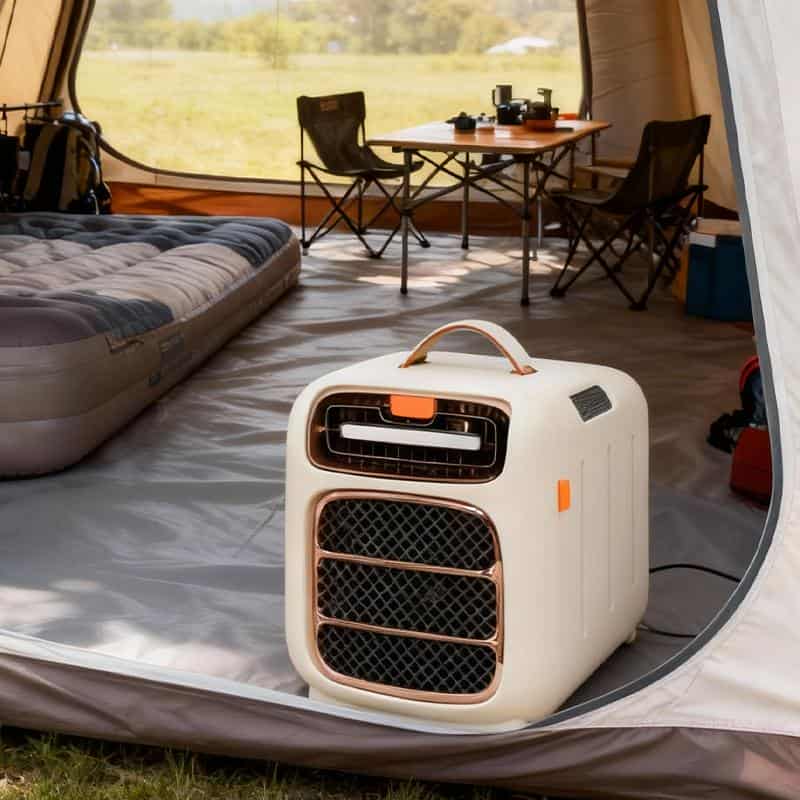
Quick answer: All-Season is not just another hard shell listing. Buyers should compare cooling-and-heating mode evidence, temperature-range limitation and defrost-and-condensate logic before they decide whether this SKU deserves space in the range.
Last reviewed: 2026-07-18. Review this product page when the model positioning, sample evidence, packaging routine or dealer message changes.
All-Season Buyer Review Table
All-Season Portable AC should be reviewed as a named SKU for B2B Buyers, with clear discussion around positioning, samples, dealer questions and quote scope.
| Review Area | Buyer Review Point |
|---|---|
| Technical angle | Use cooling-and-heating mode evidence to explain why All-Season should not be treated as a generic rooftop tent SKU. |
| Sample check | Ask for a sample review that clarifies temperature-range limitation and the buyer-facing meaning of the feature. |
| Commercial note | Document defrost-and-condensate logic in quote sheets, care guidance or dealer training before rollout. |
Focus Points for This Model
- cooling-and-heating mode evidence
- temperature-range limitation
- defrost-and-condensate logic
- camping AC
- smart portable air conditioner
- outdoor climate control
- all season portable AC supplier
- B2B Buyers
- sample review path
- dealer comparison note
- carton check
- launch timing
- target market fit
- quote scope
All-Season Technical Review Focus
The useful buying discussion starts with cooling-and-heating mode evidence, temperature-range limitation and defrost-and-condensate logic. Those points create a more defensible page than generic shell wording and help the buyer ask sharper sample questions.
Sample Validation Questions
Before launch, the sample should prove how cooling-and-heating mode evidence is shown, what temperature-range limitation actually means in dealer language, and whether defrost-and-condensate logic needs extra explanation in manuals or sales sheets.
Quote Preparation Notes
Quote requests should reference cooling-and-heating mode evidence, product positioning, target market and any packaging or care issues tied to defrost-and-condensate logic. That keeps the model page tied to real buying work.
All-Season Commercial Vocabulary
Buyers, distributors and dealer teams should keep the vocabulary for this all-season portable climate-control model consistent across sample review, quote sheets and launch materials.
- cooling-and-heating mode evidence
- temperature-range limitation
- defrost-and-condensate logic
- shoulder-season campsite offer
- heating-cooling dealer explanation
- multi-climate rental program
- mode-specific startup
- cold-condition drainage
- seasonal filter schedule
All-Season Dealer Lexicon
These terms help buyers and dealer teams discuss the model with more precision during assortment review, showroom planning and stock conversations.
- mode-specific data sheet
- cooling condition
- heating condition
- ambient operating range
- defrost sequence
- condensate behavior
- supply-air route
- return-air path
- electrical nameplate
- seasonal care log
- enclosure load assumption
- climate-zone brief
All-Season Buyer Briefing
An all-season portable AC page must separate verified cooling and heating functions, operating ranges and environmental conditions. The term all-season cannot mean every temperature, enclosure or vehicle. Buyers should request the exact nameplate, approved capacity data, test conditions, electrical requirements, airflow and clearance instructions, condensate and defrost behavior, control logic, included ducts or adapters, module configuration, noise measurement conditions, packing and service records. A sample plan should test the intended enclosure in more than one relevant season while keeping observations distinct from laboratory specifications.
Seasonal Operating-Envelope Map
Create separate application envelopes for cooling, heating and transitional weather. For each mode, record the approved ambient range, indoor return-air condition, enclosure description, ventilation arrangement, electrical supply, condensate behavior and any control limitation shown in the current documents. Overlay destination climate data only as a buyer input; do not convert it into a performance promise. Mark conditions outside the approved envelope as not evaluated. A climate-zone map should show where the sample evidence applies, where dealer qualification is required and where the product should not be promoted until additional validation exists.
Defrost, Frost and Condensate Review
Heating-mode evaluation needs a dedicated moisture and frost record. Identify where condensate forms, how it leaves the system, what the approved defrost sequence does, which indications the user sees and how the product behaves when the drain route is obstructed or exposed to freezing conditions. Inspect hoses, pans, outlets, insulation, splash paths and the surface below the unit. Record observations by ambient condition and time stamp without inventing a defrost interval. Dealers need a decision tree that separates normal mode transitions from a blocked drain, restricted airflow, sensor concern or out-of-range operation.
Mode-Change Commissioning Card
A seasonal product should not move from storage directly into a customer promise. Build a recommissioning card for visual inspection, filter condition, cable and connector review, drain path, control reset, fan operation, cooling observation and heating observation. State which checks are user-level, dealer-level or technical-service tasks. Record the exact nameplate and configuration on the card. If the unit was transported or stored outside the approved orientation or condition, follow the current manual before operation. This process creates a repeatable spring and autumn handoff for retailers, fleets and rental operators.
Climate-Specific Inventory and Support Plan
Segment stock by destination climate, selling season and service readiness rather than treating all-season as one global SKU story. Prepare distinct customer questions for hot-humid, hot-dry, cool-damp and shoulder-season use. Parts planning should consider mode controls, sensors, drains, filters, ducts, adapters and connection components by revision. Marketing calendars, dealer samples and support scripts must change with the season. Review returns and support tickets by mode and ambient context so a winter drainage issue is not blended with a summer airflow complaint. This operating model is different from a split-system page focused primarily on two-module placement.
All-Season Buyer Scenario Matrix
| Scenario | How Buyers Should Use This Page |
|---|---|
| Shoulder-season camping channel | Build a responsible cooling-and-heating explanation that states the approved operating limits and the enclosure assumptions behind model selection. |
| Regional outdoor distributor | Match destination climate, electrical system, service capability and seasonal demand before allocating a climate-control SKU. |
| Rental fleet | Create mode-specific startup, condensate, defrost, cleaning, transport and inspection records for repeat use. |
All-Season Separation Matrix
| Comparison | How Buyers Should Keep The Story Distinct |
|---|---|
| Against cooling-only units | Compare approved mode capability and operating ranges rather than using all-season as a broad marketing synonym. |
| Against permanent heat pumps | Keep installation, duty cycle, enclosure and electrical expectations within the approved portable product scope. |
| Against split-type listings | Confirm whether the quoted model is one-piece or multi-module and control all included interfaces accordingly. |
All-Season Operations Matrix
| Operations Cue | Why Buyers Track It |
|---|---|
| Climate brief | Record destination temperatures, humidity, enclosure, insulation, occupancy and power before recommendation. |
| Cooling trial | Document setup and stated conditions; compare observations with the approved cooling data without extending claims. |
| Heating trial | Record ambient condition, airflow, condensate or defrost behavior and the current operating instructions. |
| Season change | Clean accessible parts, inspect connections, drain as instructed and update the service log before changing modes. |
| Packing | Verify ducts, adapters, controls, cables, drains and protective pieces against the configuration tally. |
| Aftersales | Capture mode, ambient condition, nameplate, setup photographs and symptoms before assigning a failure category. |
All-Season Procurement Questions
- Which cooling and heating data are verified, under what conditions and for which exact configuration?
- What ambient, airflow, condensate and defrost limits must dealers state before use?
- How should seasonal storage, cleaning and recommissioning be documented?
Market Context and Buyer Language
Buyers using all season portable AC supplier in a sourcing brief normally need to connect product positioning with packaging, sample-review checkpoints and the real dealer questions that appear before launch.
Useful buyer language includes model code, dealer comparison, sample review, packaging scope, quantity planning and quote timing for All-Season. Market context still matters here: Market demand often includes accessories make RTT trips more comfortable, safer, and more organized. Related buyer language also includes camping AC, smart portable air conditioner, outdoor climate control.
FAQ
Does all-season mean the unit works in every climate?
No. Use the exact approved operating ranges, functions, test conditions and application instructions for the selected model.
What should buyers send before asking for a quote?
Send target market, quantity plan, comparison models, packaging expectations and the main product questions that must be answered before launch.
Can SUVTent support sample review and dealer launch planning?
Yes. SUVTent can support model selection, sample discussion, packaging notes and the next-step workflow for dealer or distributor launch.