B2B Wholesale Direct · OEM / ODM from 1 unit · Free Compatibility Consultation · benny@suvtent.com

OEM & ODM·Logo from 1 unit · 20–30 day light customization · 4-tier system · Factory-direct·benny@suvtent.com
OEM / ODM// REV 2025

OEM
Rooftop Tent Manufacturer— From 1 unit.

1
Unit minimum
logo branding
20–30
Days light custom
lead time
50K+
Units/month
capacity
ISO
9001 certified
factory
OEM Quick Reference
T1 — Logo & LabelFrom 1 unit · 20–30 days
T2 — Color + PackagingFrom 10 units · 30–40 days
T3 — Spec ChangesFrom 50 units · 35–45 days
T4 — Full ODMFrom 100 units · 40–60 days
Products coveredAll RTT + Accessories
Sample firstStrongly recommended
Four-Tier System

Customization Levels —
What You Can Change

Each tier stacks on the previous one. Start with logo branding, scale to full product development. All tiers begin with a sample evaluation before committing to volume.

T1Light Customization
Logo & Label
Your brand identity applied to the existing product. Zero factory-line changes.
MOQ1 unit
Lead Time20–30 days
Tooling CostNil
SampleRecommended
Includes
Custom logo label / hang tag
Custom packaging box / sleeve print
Brand swing tag and care label
Custom inner bag / pouch print
Barcode / SKU label for retail
Fabric, shell, color and structure unchanged from stock model.
T2Visual Customization
Color & Packaging
Your brand color system on fabric and packaging. No structural change.
MOQ10 units
Lead Time30–40 days
Tooling CostLow (dyeing)
SampleYes — color proof
T1 + additionally
Custom fabric color (PMS / RAL)
Custom zipper tape / puller color
Custom carry bag / pouch color
Full retail packaging design
Color-matched woven / printed label
Fabric weight, weave, shell and dimensions unchanged from base model.
T3Spec Customization
Material & Feature
Modified fabric spec, added features or dimension tweaks on an existing base model.
MOQ50 units
Lead Time35–45 days
Tooling CostMedium (trial)
SampleYes — pre-production
T1 + T2 + additionally
Upgraded fabric weight (e.g. 300D→420D)
Shell material swap (within available tooling)
Width modification (where line allows)
Extra pocket / gear loop / window mod
Upgraded waterproof coating spec
New mould creation and electronics modification not included — see Tier 4.
T4Full ODM
Product Development
New product or major redesign developed from your brief. Engineering, new moulds, factory trial.
MOQ100 units
Lead Time40–60 days
Tooling CostProject-specific
SampleYes — proto + trial
Full scope
New structural design from your brief
New mould / tooling creation
Engineering review and load testing
Prototype and revision loop
Factory trial run + full QC
Timeline and tooling cost vary by project scope. Starts with a detailed brief session.
// Lead times from order confirmation + deposit receipt. Not all product lines support all tiers — see matrix below. Actual lead time depends on factory load. Always sample before volume commitment.
From Brief to Delivery

The OEM Process —
Five Steps

A predictable, transparent process from your first inquiry to your branded product at the destination port.

01
Brief & Feasibility
Day 0–3
You send your brief — tier level, products, market, volume. We confirm feasibility and send a proposal with timeline and indicative cost.
02
Sample Evaluation
Day 4–14
We ship a pre-production sample for your evaluation. You confirm quality, dimensions and spec before committing to volume.
03
Order + Deposit
Day 15–20
You sign off on sample, confirm final spec, submit PO and pay 30% deposit. Production lead time clock starts here.
04
Production & QC
Day 20–60
Mass production with your branding. Pre-shipment QC inspection and photo report sent before goods leave factory.
05
Shipment & Docs
+ Transit
Balance payment, FCL/LCL/air freight arranged. Packing list, invoice, CoC and relevant certificates provided.
Structured Q&A

OEM FAQ —
Direct Answers

Questions brand buyers and distributors ask most often before starting an OEM engagement.

📋Getting Started
Can I really order 1 unit with my logo?
Yes. Tier 1 logo and label customization has no volume minimum on the customization itself. You order a standard stocked product and we apply your branding (label, hang tag, packaging). No special production run is required, so no minimum quantity applies to the branding work. This is specifically designed for distributors who want to evaluate their branded product in market before committing to higher volumes.
// T1: from 1 unit · 20–30 day lead time · no tooling cost
Do I need to supply artwork or will you design it?
You need to supply your brand logo in vector format (AI, EPS or high-res PDF). For packaging, you can either supply a print-ready file or provide logo, colors and copy and we can assist with layout — confirm scope when starting. Label placement templates and packaging dimensions are provided by us once you confirm the product model.
// Minimum required: vector logo file.
Is a sample required before a volume order?
For T3 and above — mandatory. For T1 and T2 — strongly recommended. Physical assessment of fabric, zipper quality, structural feel and packed dimensions reveals things that spec sheets don't. Sample cost is typically credited against a subsequent volume order — confirm this when starting your inquiry.
What do I need to provide to get started?
A useful starting brief includes: (1) target market and channel; (2) which products you want; (3) desired tier level; (4) estimated volume and timeline; (5) brand name and logo file. You don't need a complete spec sheet — we'll guide you through the rest once we understand your direction.
// Use the form below. Response within 1 business day.
⚙️Scope & Capabilities
Can I change the fabric waterproof rating?
Waterproof rating is a function of fabric specification — it's not a label choice. To change a WP rating, you change the fabric. Upgrading from PU2000mm to PU4000mm requires switching to a 300D ripstop Oxford with the correct PU coating — a Tier 3 material change (50 unit minimum, 90–120 days). We can tell you which base models already carry the WP rating you need, often the simpler solution.
Can I swap shell materials — e.g. ABS to aluminum?
Yes — material substitution within available shell tooling is a Tier 3 customization (50 units, 90–120 days). For example, switching (ABS) to aluminum is possible if the dimensions are compatible with existing aluminum tooling. If a new shell mould is required, this moves to Tier 4. Confirm feasibility first — not all swaps are compatible without structural changes.
Can I get an exclusive model that others can't order?
Yes — model exclusivity is possible at volume, by negotiation. This is outside standard tiers and requires a separate agreement. Terms depend on volume commitment, market territory and exclusivity duration. Contact us — it's a legitimate arrangement we handle case-by-case.
Can you provide CE certification for branded European products?
We provide documentation of existing certification status on specific products. If a product holds CE certification, we share that certificate. If new CE conformity is needed for a modified spec, it requires a fresh assessment through a notified body — we support with technical documentation but cannot grant CE that we don't hold on the specific product configuration.
// Never publish certification claims without verifying scope with us first.
⏱️Lead Times
When does the lead time clock start?
From deposit receipt and final spec sign-off — not from inquiry date. For T1 and T2, sign-off is sample approval plus artwork confirmation. For T3 and above, it includes pre-production sample approval. Factor in sample evaluation time (7–14 days from dispatch to your sign-off) when planning your total timeline to market.
Can you rush my order below the stated lead times?
No. The lead times reflect actual production scheduling. The 20–30 day Tier 1 timeline accounts for factory load, printing, assembly and inspection. Rushing branded goods creates quality risk. If timeline is critical, the best strategy is to stay within Tier 1 parameters — logo-only on a stocked product, shipped within 20–30 days from deposit. Discuss your constraints upfront and we'll be honest about what's achievable.
💰Pricing & Terms
Does OEM cost more than standard wholesale?
Tier 1 adds minimal cost — label printing and packaging is nominal per-unit. Tier 2 adds dyeing setup cost, amortized across the order. Tier 3 has material cost differences and trial production cost. Tier 4 has project-specific engineering and tooling costs quoted separately. All costs are disclosed in the proposal before you commit — we don't hide costs that appear at invoicing.
What are the standard payment terms?
30% deposit to start production, 70% balance before shipment. For established accounts or larger volume programs, extended payment terms can be discussed. Wire transfer (T/T) is standard. For new relationships, full payment or L/C may be required initially. Payment terms are confirmed in the formal quotation.

Start Your
OEM Inquiry

Tell us your tier, target products and market. We respond within 1 business day with feasibility confirmation, indicative pricing and lead time. No commitment at inquiry stage.

Also via WhatsApp. Include your number in the form and we'll follow up for faster back-and-forth on spec details.
// OEM Inquiry
Please fill in all required fields (Name, Company, Email, Tier, Brief).

We respond to every genuine OEM inquiry within 1 business day.

Quick answer: An OEM rooftop tent manufacturer page should guide private label buyers through product development decisions before they ask for a logo quote. The key topics are base model choice, shell or fabric color, logo position, packaging artwork, sample approval, manual requirements, and production confirmation.

OEM Rooftop Tent Manufacturer Support for Private Label Buyers

OEM and ODM projects fail when buyers treat branding as a last-minute decoration. A rooftop tent has visible shell panels, fabric surfaces, ladder parts, mounting hardware, carton marks, manuals, and online product images; all of these can affect brand presentation.

SUVTent OEM discussions should start with the buyer's sales channel and model direction. A premium outdoor brand may need a conservative logo system and packaging consistency, while a startup may need help choosing a base model that can launch with fewer custom risks.

Brand scope

Separate what must be custom from what can stay standard: logo, color, carton, manual, accessory bundle, and product photography.

Approval discipline

Private label work needs artwork confirmation, sample review, packaging proof, and final specification lock before production.
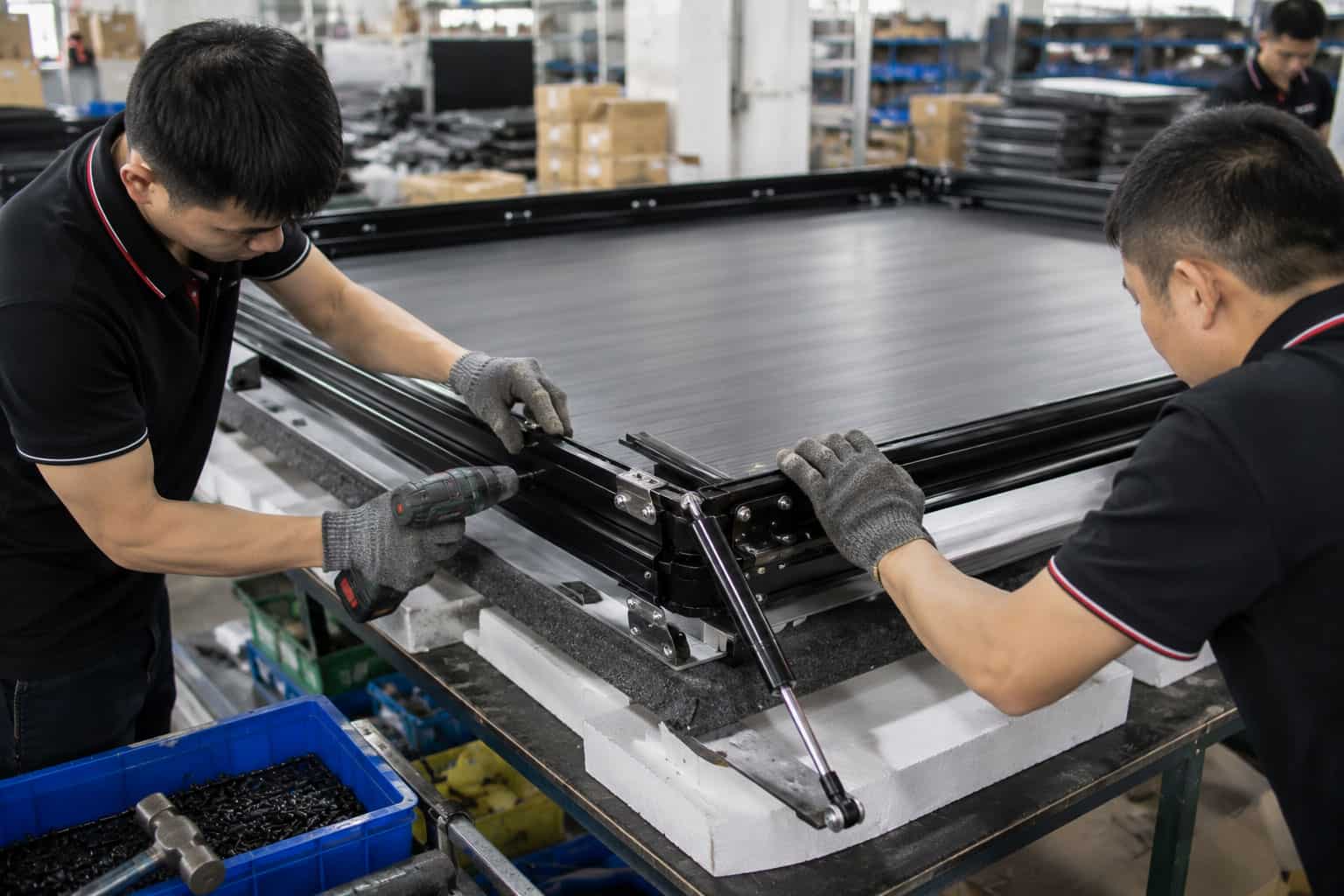
oem rooftop tent manufacturer B2B sourcing visual - RTT OEM ODM supplier: Custom Branding and Supply Guide - Factory image 1
Use product visuals to compare oem rooftop tent manufacturer structure, packed height, hardware position, and packaging needs before requesting samples.

OEM Rooftop Tent Project Map

Evaluation areaWhat to checkWhy it matters
Base modelHard shell, soft shell, inflatable, side-open, wedge, or accessory bundle.The base model controls most cost, MOQ, and timeline decisions.
Visual brandingLogo size, position, color, shell finish, fabric mark, zipper pull, and carton mark.Branding should look consistent in product, packaging, and online media.
DocumentationManual, warning label, spec sheet, installation guide, and market language.Documentation quality affects dealer confidence and after-sales workload.
Approval pointsArtwork file, sample photos, packaging proof, final specs, and production confirmation.Avoids expensive changes after materials are prepared.

OEM Rooftop Tent Inquiry Checklist

  • Choose the base product family before asking for logo placement.
  • Prepare logo files, color references, packaging ideas, and any required language.
  • Clarify whether the project is private label only or requires structural ODM changes.
  • Ask about MOQ differences for color, logo, carton, manual, and accessory bundle.
  • Confirm sample approval steps and what evidence is needed before production release.

Private Label Development Flow

  1. Define buyer market, price tier, and target vehicle segment.
  2. Select a base model and decide what must be customized.
  3. Prepare artwork and packaging requirements.
  4. Review sample photos or physical sample before final approval.
  5. Lock specification, packaging, and production details for the purchase order.

Detailed Sourcing Notes for oem rooftop tent manufacturer

OEM Rooftop Tent Manufacturer Support for Private Label Buyers should be reviewed as a complete sourcing path. Buyers should connect the page topic with channel role, vehicle segment, model positioning, packaging pressure, sample expectations, and what their own sales team needs to explain after launch. This keeps the discussion grounded in commercial use instead of turning the page into a keyword-only article.

The first evaluation area is base model: Hard shell, soft shell, inflatable, side-open, wedge, or accessory bundle.. This matters because the base model controls most cost, moq, and timeline decisions. The second area is visual branding: Logo size, position, color, shell finish, fabric mark, zipper pull, and carton mark.. For a buyer comparing suppliers, these two points create a more useful conversation than asking for a general catalog or a single lowest price.

Before sample or bulk discussion, the buyer should start with practical preparation: Choose the base product family before asking for logo placement. The next step is to prepare logo files, color references, packaging ideas, and any required language. Then the buyer can clarify whether the project is private label only or requires structural odm changes. This sequence gives SUVTent enough context to reply with product information that matches the buyer's actual business model.

The recommended workflow starts when the buyer can define buyer market, price tier, and target vehicle segment. After that, the team should select a base model and decide what must be customized. and prepare artwork and packaging requirements. By the time price, MOQ, and delivery terms are compared, both sides should already understand the product role, buyer risk, and support material needed for a cleaner launch.

Best-Fit Buyer Scenarios for oem rooftop tent manufacturer

This page is most useful for buyers who already have a commercial direction but need to turn that direction into a supplier conversation. For example, one buyer may care most about brand scope, while another buyer may be trying to solve approval discipline. These are not the same inquiry, so the quotation process should not treat them as the same request.

A strong-fit buyer usually brings enough context for SUVTent to understand the real job behind the keyword. That includes the buyer's sales channel, expected model role, target vehicle group, launch timing, and the type of support material needed for dealers or end customers. Without that context, the reply can only stay general; with it, the discussion can move toward model selection, packaging, sample approval, and order planning.

This page is less suitable for buyers who want a one-line price without model direction, vehicle context, or order plan. Rooftop tent sourcing depends on details such as documentation, where buyers need to check Manual, warning label, spec sheet, installation guide, and market language.. The reason is simple: documentation quality affects dealer confidence and after-sales workload. Those details influence total cost, customer satisfaction, and the amount of after-sales explanation required by the local seller.

If the buyer is ready to move forward, the most useful next message should include three layers. First, ask about moq differences for color, logo, carton, manual, and accessory bundle. Second, confirm sample approval steps and what evidence is needed before production release. Third, the buyer should be ready to review sample photos or physical sample before final approval. and lock specification, packaging, and production details for the purchase order. This creates a cleaner path from web page reading to a serious B2B inquiry.

One common question is: What is the difference between OEM and ODM for rooftop tents? The practical answer is: OEM usually adapts branding and packaging around an existing model; ODM may involve deeper product development and more approval steps. That answer is included here because real buyers often ask this before they are ready to compare formal quotes, and it gives the page a more useful role than a simple landing section.

oem rooftop tent manufacturer Decision Notes for Procurement Teams

oem rooftop tent manufacturer planning should stay connected to the buyer's real sales channel. When a buyer compares oem rooftop tent manufacturer, the discussion should include base model, visual branding, and documentation instead of stopping at a catalog request.

A useful oem rooftop tent manufacturer inquiry also explains why the buyer is sourcing now: new product launch, dealer expansion, OEM branding, replacement of an old supplier, or compatibility support for a specific vehicle segment. This gives SUVTent a better way to match oem rooftop tent manufacturer information with model recommendations, packaging notes, and quote preparation.

For page visitors, the goal of this oem rooftop tent manufacturer section is clarity. It helps buyers decide whether the page answers their current question, which details still need verification, and when to move from reading to a structured B2B inquiry.

Useful Internal Paths for This Buyer Intent

Continue the sourcing path through rooftop tent products, B2B sourcing support, OEM rooftop tent support, and contact SUVTent. These links are included because the next useful action changes by page: product comparison, compatibility screening, OEM discussion, distributor planning, or direct contact.

Verification Notes for oem rooftop tent manufacturer

OEM buyers should verify artwork ownership, labeling requirements, and any market-specific document needs before mass production. Supplier capability should be judged by process clarity, not by broad customization promises. Buyers can use the ISO 9001 quality management overview as a question framework and Google's structured data documentation as context for why page entities and FAQs are marked clearly.

FAQ About oem rooftop tent manufacturer

What is the difference between OEM and ODM for rooftop tents?

OEM usually adapts branding and packaging around an existing model; ODM may involve deeper product development and more approval steps.

Can I start with a small private label test?

That depends on model, artwork, packaging, and MOQ. A standard model with limited branding is usually easier to test.

What files should I prepare?

Prepare logo vector files, color references, packaging notes, language requirements, and examples of the desired brand style.

When should packaging be confirmed?

Packaging should be confirmed before production planning because carton marks, manual, labels, and artwork can affect timing.

Request Support for oem rooftop tent manufacturer

Request OEM rooftop tent options for logo placement, color, packaging artwork, and product development.

Request catalog, quote, and compatibility support

Not Sure Which RTT Fits Your Market? Share your vehicle type and use case — get a matched recommendation in 12 hours.

Call WhatsApp Email