B2B Wholesale Direct · OEM / ODM from 1 unit · Free Compatibility Consultation · benny@suvtent.com

Step-by-Step Matcher

Get Your Free
B2B Sourcing Support

Answer 4 questions. We match the right RTT from our product family and send you spec sheets within 1 business day.
1
Vehicle
2
Market
3
Scenario
4
Contact

What type of vehicle?

Choose the category that best describes the vehicle your buyers will mount this on.

🚙

Mid-Size SUV

RAV4, CR-V, Tucson, Tiguan

🛻

Full-Size SUV / 4WD

Land Cruiser, Defender, Patrol

🚛

Pickup Truck

Tacoma, Ranger, Hilux, F-150

⛰️

Off-Road / Overland Build

Modified rig with roof rack system

🚗

Compact SUV / Crossover

CX-5, Forester, Sportage

🚐

Van / RV / Campervan

Transit, Sprinter, Hiace

Step 1 of 4

Target market & buyer profile?

Different markets have different RTT preferences — this shapes shell type, fabric weight and feature set.

🇺🇸

United States / Canada

Overlanding, outdoor lifestyle, SUV & truck culture

🇪🇺

Europe

Premium outdoor, weekend adventure, 4x4 lifestyle

🇦🇺

Australia / New Zealand

Off-road 4WD, rugged terrain, bush camping

🇸🇦

Middle East

Desert camping, large SUVs, growing RTT market

🌏

Southeast Asia

Emerging outdoor market, tropical climate

🌐

Other / Multiple Markets

Multi-region distributor or not yet decided

Use scenario & shell preference

How will the buyers use this? And do they have a preference on shell type?

Weekend Camping

Light use, easy setup priority

🛤️

Overlanding / Off-Road

Extended trips, durability priority

🏜️

Desert / Arid Climate

Heat & dust resistance needed

🏔️

Alpine / Cold Weather

Insulation & waterproofing priority

🔳

Hard Shell

Aluminum / ABS — fast deploy

💨

Inflatable

Air-beam structure — unique market

🎯

No Preference

Show me what fits best

Where should we send the recommendation?

We'll email you matched models, spec sheets and fitment notes. No spam — ever.

📦

Distributor

🏬

Wholesaler

🎨

Brand Owner

🏪

Retailer

🚢

Importer

👤

Other

We've received your request!

Expect a detailed compatibility recommendation in your inbox within 1 business day. We'll include matched model names, spec comparison and a catalog PDF.

What's coming your way
📋 Matched RTT models with specs & dimensions
📐 Fitment notes for your vehicle type
📦 Product catalog PDF
💬 Direct contact for follow-up questions

Questions right now? Email us: benny@suvtent.com

Live Preview

Your Match Will
Appear Here

As you answer the questions, we'll show a preview of likely RTT matches.

Vehicle type
Market
Scenario
Shell type
🎯

Complete Step 1 to see likely product matches from our hard shell and inflatable RTT families.

Common Questions

Rooftop Tent
Compatibility FAQ

Questions distributors and buyers ask most often about RTT B2B vehicle and rack fitment, selection and the B2B sourcing consultation service.

Jump to Section
Still have questions?

Our compatibility advisors are ready to help with your specific vehicle and market situation.

Ask Free →
Vehicle Fitment
What is the minimum roof load rating needed to mount a rooftop tent?
Most rooftop tents weigh between 35–65 kg depending on shell type and size. When adding occupants, the static load can reach 200 kg or more. As a general rule, your vehicle's roof dynamic load rating should be at least 75 kg, and the roof rack or crossbar system should be independently rated for static loads. Always check the vehicle manufacturer's official specifications — never rely on general estimates alone.
A roof rack system can often extend what's possible. If the vehicle's native roof rating is borderline, a quality rack system with its own load rating may allow heavier RTTs. Contact us with your specific vehicle and we'll help you assess the options.
Does a rooftop tent need crossbars or a roof rack to mount?
Yes. All rooftop tents in our range require a mounting surface — either factory crossbars, aftermarket crossbars, or a full roof rack platform. The RTT base brackets clamp onto the bars. T-slot profile bars (like Thule WingBar, Yakima FlushBar) offer the most flexibility. The crossbar spread (distance between front and rear bars) should match or exceed the RTT's mounting bracket width — typically 60–100 cm apart minimum.
Can the same rooftop tent fit different vehicle models?
Yes — our RTT models are designed to fit across vehicle classes through the crossbar mounting system rather than being vehicle-specific. A hard shell RTT, for example, can fit a Toyota RAV4, a Subaru Forester, or a Mazda CX-5 as long as all three have compatible crossbars and sufficient roof load ratings. What changes between vehicles is the mounting bracket configuration and sometimes the crossbar adapter needed. We'll specify this in the compatibility recommendation we send you.
What is the packed (closed) size of your rooftop tents?
Packed sizes vary by model family. Triangle / wedge RTTs typically close to around 225×143×20 cm. Side-open models pack to approximately 200×130×30 cm. Box-style RTTs range from 210×130×18 cm to 216×130×32 cm. Inflatable RTTs have a very different profile when deflated — the hard-base inflatable packs to approximately 140×30×125 cm. We include exact packed dimensions in every spec sheet we send.
Hard Shell vs Inflatable RTT
What is the difference between a hard shell and inflatable rooftop tent?
Hard shell RTTs use a rigid outer shell (aluminum alloy, ABS, or fiberglass) that protects the sleeping cabin when folded and deploys via gas struts. They're durable, aerodynamic when closed, and deploy in under 2 minutes. Inflatable RTTs use PVC air-beam poles instead of a rigid shell — the tent inflates via a pump in minutes. They offer a different aesthetic and can command a premium positioning for buyers looking for something visually distinctive.
For most distributors entering the RTT category: start with hard shell. Inflatable RTTs are a strong addition once you've validated basic RTT demand in your market.
Which RTT shell type sells better in the US and Australian markets?
Hard shell RTTs dominate both markets, particularly aluminum shell models for the overlanding and off-road segments. In the US, triangle and side-open aluminum designs are popular with the Toyota Tacoma and 4Runner crowd. In Australia, hard shell models suit the 4WD culture where durability and UV resistance matter. Inflatable RTTs have a niche but growing market in both regions, particularly among buyers looking for a visual differentiator at outdoor expos or overlanding events.
What fabrics do your rooftop tents use and what are the waterproof ratings?
Across our product catalog: sleeping cabin fabrics are typically 280g poly-cotton or 300D–330G ripstop canvas / Oxford. Rainfly fabrics are typically 400D–600D Oxford. Waterproof ratings range from PU2000mm on entry-level models to PU4000mm on premium models. Each model has its own specific fabric and waterproof spec — we'll include the exact data sheet for each matched model in the recommendation we send you.
About This Service
Is the B2B sourcing consultation really free? What's the catch?
There is no catch. The B2B sourcing support is a free service with no purchase obligation. We offer it because the #1 question our distributors' customers ask is "will this fit my vehicle?" — and we'd rather help you answer that correctly upfront than have you order the wrong product. You'll receive matched models, spec sheets and fitment notes. Whether you order, ask more questions, or do nothing at all is entirely your choice.
How long does it take to receive a recommendation?
We aim to respond to all compatibility requests within 1 business day. For straightforward vehicle-type matches (e.g. standard SUV or pickup truck), responses are typically faster. For more complex fitment questions involving modified vehicles, unusual roof systems or multi-market requirements, it may take up to 2 business days to give you a properly researched recommendation.
What do I receive in the compatibility recommendation?
Your B2B sourcing support package includes: matched RTT model names from our product family, spec comparison between recommended models, fitment notes specific to your vehicle type and roof system, a product catalog PDF with photos and full specifications, and a direct contact for follow-up questions, sample inquiry or quotation request.
For Distributors & Wholesalers
Can I order a single unit to test before committing to a larger order?
Yes. Our sample program allows orders from 1 unit. We specifically designed this for distributors and agents who need to validate product-market fit before placing a bulk order. Testing a product in your market before committing to volume is the smart approach — and we made it possible. Once you've validated, we can discuss volume pricing, stocking arrangements and the distributor program.
Can you provide compatibility support materials my sales team can use with buyers?
Yes. Along with the compatibility recommendation, we can provide B2B vehicle and rack fitment reference materials, product spec sheets, application scenario guides and structured product data your team can use to answer customer questions. For active distributor partners, we support ongoing catalog access, product knowledge resources and new model update materials.
Do you offer OEM or private label on rooftop tents?
Yes. We offer OEM and ODM services for brand owners and distributors building their own product lines. This includes custom branding, logo, color options, packaging and in some cases design modifications. OEM minimums and capabilities depend on the specific model and customization scope. Once we've completed your compatibility assessment and you have a clear product direction, we can discuss OEM options as part of the next step.
Ready When You Are
Get Your Free
B2B Sourcing Support

No order required. No sales pitch. Just a clear RTT recommendation with spec sheets and fitment notes — within 1 business day.

Or contact us at benny@suvtent.com · We reply within 1 business day

Quick answer: Rooftop tent compatibility is a fitment and risk-control topic. Buyers should check dynamic roof load, static capacity, rack type, crossbar spacing, tent weight, installation height, ladder angle, and customer vehicle mix before recommending a model.

Rooftop Tent Compatibility Checks Before Product Selection

Compatibility pages are especially important for dealers because one wrong recommendation can create returns, installation problems, and unhappy end users. A good page should teach buyers what information to collect before asking for a tent recommendation.

SUVTent's compatibility conversation is built around vehicle segment, roof system, product weight, and use case. The goal is not to promise universal fitment; it is to screen likely matches and identify questions that must be verified before installation.

Vehicle data first

Collect vehicle model, roof type, rack brand or platform, dynamic roof load, and installation height before comparing tent styles.

Dealer protection

Compatibility notes help dealers avoid overselling one model to every vehicle and make their own customer support easier.
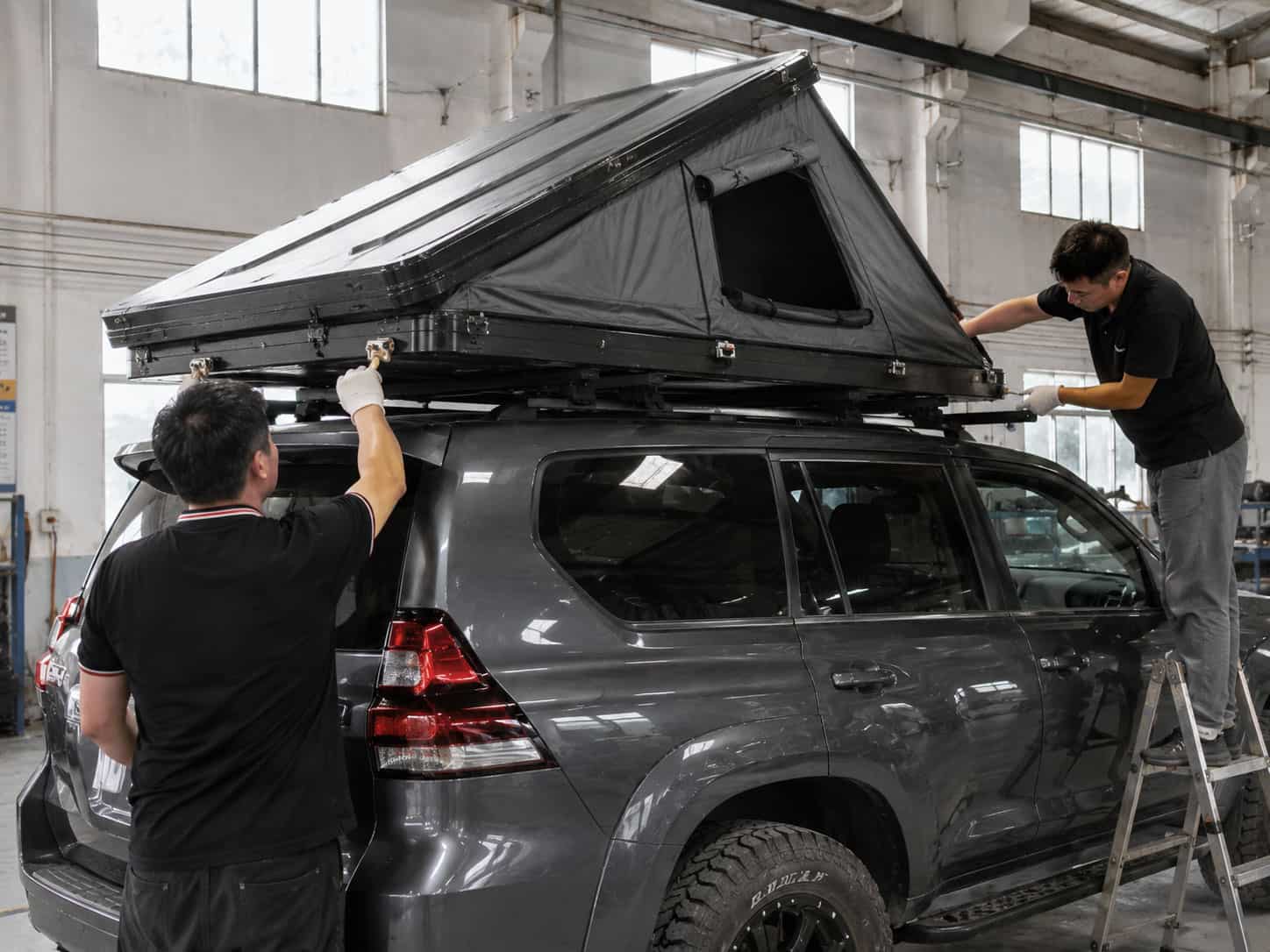
rooftop tent compatibility B2B sourcing visual - Vehicle Fitment And Compatibility Test | SUVTent
Use product visuals to compare rooftop tent compatibility structure, packed height, hardware position, and packaging needs before requesting samples.

Compatibility Data Buyers Should Collect

Evaluation areaWhat to checkWhy it matters
Vehicle roofFactory rails, gutters, bare roof, truck bed rack, platform rack, or crossbars.The mounting system limits what tent weight and footprint make sense.
Load guidanceDynamic roof load, static support discussion, rack rating, and road-use assumptions.Buyers must separate driving load from parked camping load.
Tent dimensionsClosed footprint, packed weight, ladder direction, and overhang.Fitment can fail even when weight looks acceptable.
User scenarioSolo trips, family camping, rental fleet, extreme overlanding, or showroom demo.The best compatible model changes with real use case.

Rooftop Tent Compatibility Inquiry Checklist

  • Send vehicle year, make, model, roof type, and rack details.
  • Confirm the rack manufacturer's dynamic load guidance and mounting points.
  • Compare tent closed size with crossbar spacing and vehicle roof length.
  • Check ladder angle, vehicle height, side opening, rear hatch clearance, and parking environment.
  • Ask whether a lighter tent, lower closed height, or truck bed rack solution would reduce risk.

Compatibility Screening Flow

  1. Identify the most common vehicles in the buyer's customer base.
  2. Group them by rack type and realistic roof load range.
  3. Match product families to those groups instead of recommending one model for all cars.
  4. Create dealer notes for vehicles that need extra verification.
  5. Use customer feedback to refine the compatibility list over time.

Detailed Sourcing Notes for rooftop tent compatibility

Rooftop Tent Compatibility Checks Before Product Selection should be reviewed as a complete sourcing path. Buyers should connect the page topic with channel role, vehicle segment, model positioning, packaging pressure, sample expectations, and what their own sales team needs to explain after launch. This keeps the discussion grounded in commercial use instead of turning the page into a keyword-only article.

The first evaluation area is vehicle roof: Factory rails, gutters, bare roof, truck bed rack, platform rack, or crossbars.. This matters because the mounting system limits what tent weight and footprint make sense. The second area is load guidance: Dynamic roof load, static support discussion, rack rating, and road-use assumptions.. For a buyer comparing suppliers, these two points create a more useful conversation than asking for a general catalog or a single lowest price.

Before sample or bulk discussion, the buyer should start with practical preparation: Send vehicle year, make, model, roof type, and rack details. The next step is to confirm the rack manufacturer's dynamic load guidance and mounting points. Then the buyer can compare tent closed size with crossbar spacing and vehicle roof length. This sequence gives SUVTent enough context to reply with product information that matches the buyer's actual business model.

The recommended workflow starts when the buyer can identify the most common vehicles in the buyer's customer base. After that, the team should group them by rack type and realistic roof load range. and match product families to those groups instead of recommending one model for all cars. By the time price, MOQ, and delivery terms are compared, both sides should already understand the product role, buyer risk, and support material needed for a cleaner launch.

Best-Fit Buyer Scenarios for rooftop tent compatibility

This page is most useful for buyers who already have a commercial direction but need to turn that direction into a supplier conversation. For example, one buyer may care most about vehicle data first, while another buyer may be trying to solve dealer protection. These are not the same inquiry, so the quotation process should not treat them as the same request.

A strong-fit buyer usually brings enough context for SUVTent to understand the real job behind the keyword. That includes the buyer's sales channel, expected model role, target vehicle group, launch timing, and the type of support material needed for dealers or end customers. Without that context, the reply can only stay general; with it, the discussion can move toward model selection, packaging, sample approval, and order planning.

This page is less suitable for buyers who want a one-line price without model direction, vehicle context, or order plan. Rooftop tent sourcing depends on details such as tent dimensions, where buyers need to check Closed footprint, packed weight, ladder direction, and overhang.. The reason is simple: fitment can fail even when weight looks acceptable. Those details influence total cost, customer satisfaction, and the amount of after-sales explanation required by the local seller.

If the buyer is ready to move forward, the most useful next message should include three layers. First, check ladder angle, vehicle height, side opening, rear hatch clearance, and parking environment. Second, ask whether a lighter tent, lower closed height, or truck bed rack solution would reduce risk. Third, the buyer should be ready to create dealer notes for vehicles that need extra verification. and use customer feedback to refine the compatibility list over time. This creates a cleaner path from web page reading to a serious B2B inquiry.

One common question is: Can one rooftop tent fit every SUV? The practical answer is: No. Vehicle roof structure, rack type, tent footprint, and weight all affect fitment. That answer is included here because real buyers often ask this before they are ready to compare formal quotes, and it gives the page a more useful role than a simple landing section.

rooftop tent compatibility Decision Notes for Procurement Teams

rooftop tent compatibility planning should stay connected to the buyer's real sales channel. When a buyer compares rooftop tent compatibility, the discussion should include vehicle roof, load guidance, and tent dimensions instead of stopping at a catalog request.

A useful rooftop tent compatibility inquiry also explains why the buyer is sourcing now: new product launch, dealer expansion, OEM branding, replacement of an old supplier, or compatibility support for a specific vehicle segment. This gives SUVTent a better way to match rooftop tent compatibility information with model recommendations, packaging notes, and quote preparation.

For page visitors, the goal of this rooftop tent compatibility section is clarity. It helps buyers decide whether the page answers their current question, which details still need verification, and when to move from reading to a structured B2B inquiry.

Useful Internal Paths for This Buyer Intent

Continue the sourcing path through rooftop tent products, B2B sourcing support, OEM rooftop tent support, and contact SUVTent. These links are included because the next useful action changes by page: product comparison, compatibility screening, OEM discussion, distributor planning, or direct contact.

Verification Notes for rooftop tent compatibility

Buyers should verify vehicle and rack load data with the vehicle or rack manufacturer. SUVTent can support product-side comparison, but final installation must follow the relevant rack and vehicle guidance. Buyers can use the ISO 9001 quality management overview as a question framework and Google's structured data documentation as context for why page entities and FAQs are marked clearly.

FAQ About rooftop tent compatibility

Can one rooftop tent fit every SUV?

No. Vehicle roof structure, rack type, tent footprint, and weight all affect fitment.

What is the first compatibility question?

Start with the roof system and dynamic load rating, then compare tent weight and footprint.

Does static capacity replace dynamic roof load?

No. Static and dynamic conditions are different, and buyers should avoid mixing them when advising customers.

What should I send for a compatibility review?

Send vehicle model, rack photos or specifications, target tent type, customer use case, and destination market.

Request Support for rooftop tent compatibility

Send vehicle models, roof rack details, and target tent sizes to get a rooftop tent compatibility review.

Request catalog, quote, and compatibility support

Not Sure Which RTT Fits Your Market? Share your vehicle type and use case — get a matched recommendation in 12 hours.

Call WhatsApp Email